Home Planning & Renovations
Your Co-op Board Rejected Your Renovation — Here’s How to Fix the Package and Get Approved
By Yoel Piotraut
If your co-op board rejected renovation plans you thought were ready, you’re not alone — and in most cases, the rejection is fixable. The frustration is real: you’ve paid an architect, chosen finishes, maybe even signed with a contractor. And now the board says no.
Here’s what most owners don’t realize: co-op boards rarely reject renovations because they object to the project itself. They reject packages that are incomplete, unclear, or missing documentation the building requires. That’s a paperwork problem, not a design problem — and paperwork problems have solutions.
At a glance
- Get the rejection in writing — request specific objections from the managing agent so you know exactly what to fix.
- Diagnose the trigger — most rejections stem from incomplete drawings, inadequate contractor insurance, or missing alteration agreement sections.
- Fix each issue systematically — update drawings, correct insurance certificates, complete every agreement section, and address shared-system concerns with engineer review.
- Resubmit a complete package — boards respond to completeness, not piecemeal updates.
- Consider professional help — a renovation team with board-approval experience can turn a rejection into an approval faster than you can alone.
Why Co-op Boards Reject Renovations (It’s Rarely Personal)
Short answer: Boards aren’t rejecting your vision — they’re rejecting risk. Most denials come from incomplete documentation, inadequate insurance, or unclear scope, not opposition to the renovation itself.
The Board’s Job Is Risk Management, Not Design Review
In a co-op, you own shares in a corporation and the right to occupy your unit under a proprietary lease.¹ That structure gives the board a legal obligation to protect shared systems, the building’s insurance exposure, and other shareholders.
Renovations are high-risk moments for all of the above. A plumbing mistake in your bathroom can flood three apartments below you. An unlicensed contractor can expose the building to liability. A vague scope can turn into unauthorized work that damages common areas.
When the board scrutinizes your package, they’re not being difficult. They’re doing their job — especially in prewar buildings on the Upper West Side, Upper East Side, Park Slope, and Brooklyn Heights, where aging infrastructure makes boards understandably cautious.
Most Rejections Are Fixable — If You Know What Triggered Them
Rejection letters almost never say “this project is fundamentally unacceptable.” They say “incomplete documentation,” “insurance certificate does not meet requirements,” or “drawings do not clearly show proposed work.”
Those are specific, fixable issues. The key is getting the rejection reasons in writing and addressing each one systematically.
The 7 Most Common Reasons NYC Co-op Boards Reject Renovations
Short answer: Incomplete drawings, inadequate contractor insurance, missing alteration agreement sections, unprotected shared-system work, inexperienced contractors, scope that violates house rules, and poor submission timing cause the vast majority of rejections.
1. Incomplete or Unclear Architectural Drawings
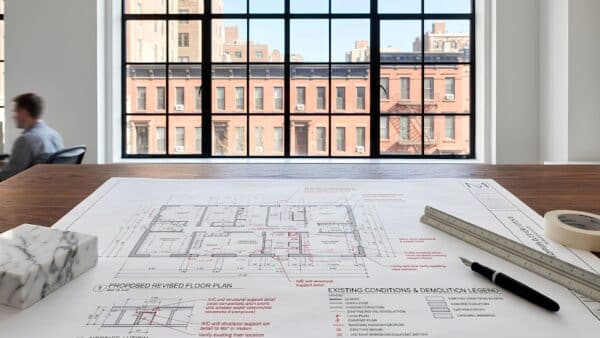
Boards need to understand exactly what’s changing — and what’s not. Drawings that show only the “after” without demolition plans, or that lack dimensions and specifications, invite questions. Questions lead to tabling. Tabling means another month of waiting.
Board-ready drawings typically include: existing conditions, demolition plan, proposed plan, and any engineering details for structural or mechanical work.
2. Contractor Insurance That Doesn’t Meet Building Requirements
This is one of the most common rejection triggers — and it’s purely administrative. Most Manhattan and Brooklyn co-ops require:
- General liability limits of $1 million per occurrence / $2 million aggregate (some buildings require higher)
- Additional-insured endorsements naming the co-op corporation and managing agent
- Workers’ compensation coverage
- A certificate of insurance on the correct form, issued by the contractor’s insurer
If your contractor’s certificate doesn’t match the building’s requirements exactly, the package gets rejected. The fix is straightforward: have your contractor request an updated certificate from their insurer.
3. Missing or Incomplete Alteration Agreement
The alteration agreement is the contract between you and the building that governs your renovation. As The Cooperator² explains, these agreements cover work hours, protection requirements, insurance, deposits, and your responsibility for any damage.
Common missed sections: neighbor notification signatures, work-hour acknowledgments, deposit checks, and protection-plan details. If the agreement is incomplete, the board won’t review the rest of your package.
4. Scope That Touches Shared Systems Without Adequate Protection
Plumbing risers, electrical panels, structural walls — anything that connects to building systems triggers extra scrutiny. Boards want to see:
- Engineer sign-off for structural or mechanical work
- A clear protection plan for adjacent units and common areas
- Insurance that covers the specific risks
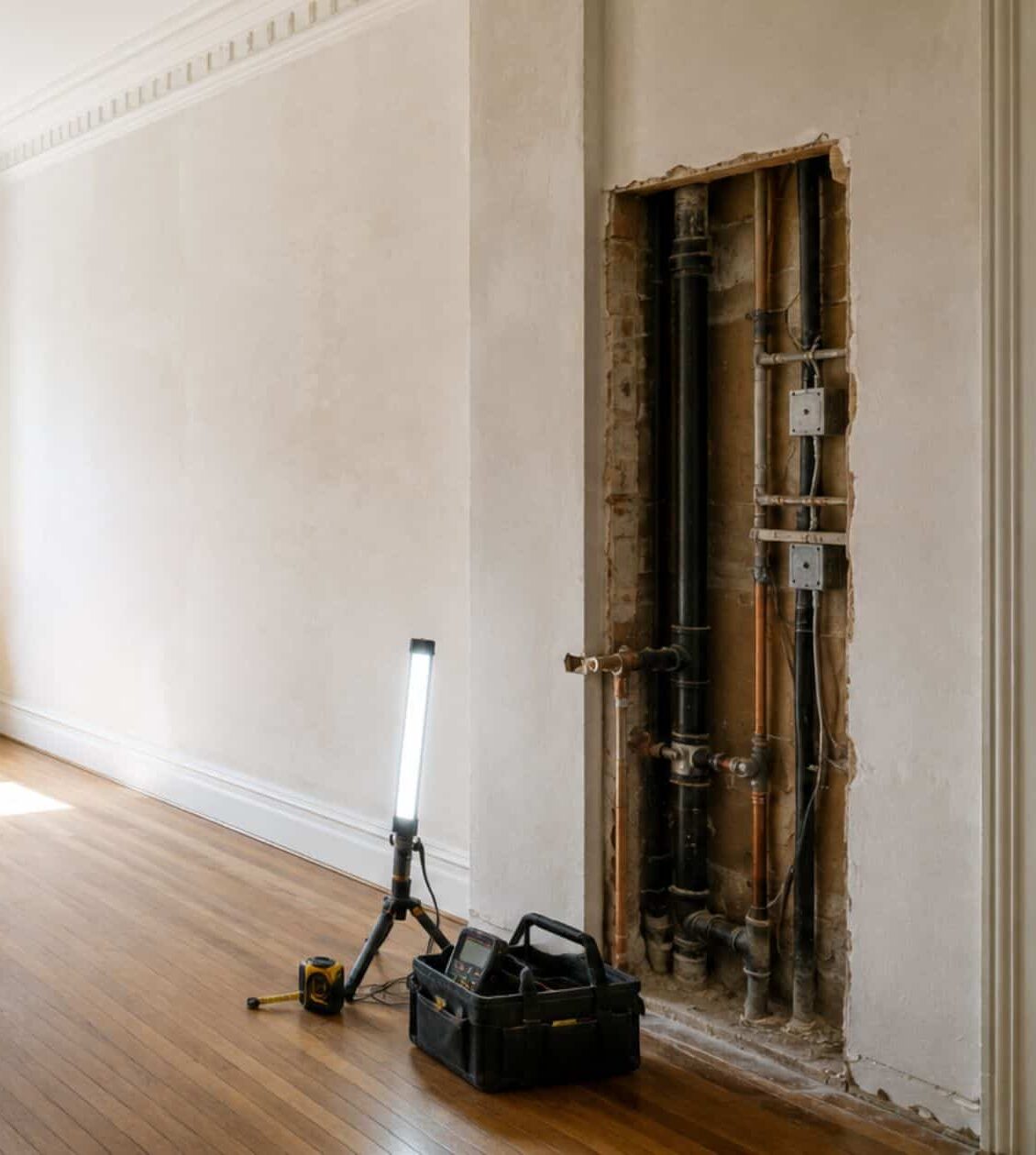
In prewar co-ops across Chelsea, Greenwich Village, and Tribeca, shared cast-iron risers and original electrical systems make boards particularly cautious about any work that touches building infrastructure.
5. Contractor Without Co-op Experience or References
Boards vet contractors. They want to see prior co-op experience, references from similar buildings, and a history of completing work without complaints. Some managing agents maintain informal lists of contractors who’ve caused problems — and they share notes.
If your contractor has never worked in a co-op, or can’t provide references from Manhattan or Brooklyn buildings, that’s a red flag. This is one of the harder fixes — it may mean changing contractors.
6. Work That Violates House Rules or Proprietary Lease
Some buildings prohibit certain changes outright. Common restrictions include:
- Washer/dryers (especially in older buildings with limited electrical capacity)
- Combining units without board pre-approval
- “Wet-over-dry” configurations (putting a bathroom above a neighbor’s bedroom)
- Alterations to windows, facades, or terraces
If your scope violates the building’s governing documents, no amount of documentation fixes it. You’ll need to revise the scope or apply for a variance.
7. Poor Timing or Incomplete Submission
Boards meet monthly. Most have submission deadlines two to three weeks before the meeting. Miss the deadline, and your package sits until the next cycle.
If you submit an incomplete package, it gets tabled — not rejected outright, but not approved either. You’re stuck explaining fixes at the next meeting instead of starting work.
How to Get Your Rejection Letter — And What to Do With It
Short answer: Request a written explanation from the managing agent. Don’t rely on verbal feedback — get the specific objections documented so you can address each one.
Request a Written Explanation From the Managing Agent
The managing agent is your primary contact with the building. After a rejection, call or email them and ask for the specific reasons in writing. Many owners never take this step — they assume they know why they were rejected, and they guess wrong.
A written rejection letter gives you a checklist. Each objection becomes a task.
Map Each Objection to a Specific Fix
Go through the letter line by line. For each objection, identify:
- What document or information is missing?
- Who needs to provide it (you, your contractor, your architect)?
- What’s the deadline for resubmission?
Once you’ve mapped the objections, you have a recovery plan.

Fixing Your Package — Step by Step
Short answer: Update drawings for clarity, get contractor insurance certificates corrected, complete every section of the alteration agreement, and address shared-system concerns with engineer review. If your contractor was the problem, you may need a new contractor.
Update Drawings to Show Exactly What’s Changing
If the board cited unclear or incomplete drawings, get them revised. Work with your architect to include:
- Existing conditions
- Demolition plan (what’s being removed)
- Proposed plan (what’s being built)
- Engineering details for any structural or mechanical work
Boards approve what they understand. Make it easy for them.
Get Your Contractor’s Insurance Right
Contact your contractor and have them request an updated certificate from their insurer. The certificate must:
- Meet the building’s specific limits
- Name the co-op corporation and managing agent as additional insureds
- Be issued on the correct form (your managing agent can provide the requirements)
This is usually a 24-48 hour fix if your contractor has proper coverage.
Complete the Alteration Agreement — Every Section
Review the alteration agreement section by section. Sign everything that requires a signature. Provide neighbor notifications if required. Include deposit checks. Attach the protection plan.
An incomplete alteration agreement is the easiest rejection to prevent — and the most frustrating to receive.
Address Shared-System Concerns With Engineer Review
If the rejection cited concerns about plumbing, electrical, or structural work, get a licensed engineer to review and sign off. According to the NYC Department of Buildings,³ certain alterations require permits and professional sign-off regardless of board requirements.
Choose a Contractor the Building Will Approve
If your contractor was cited as a concern — no co-op experience, inadequate insurance, or a history with the building — you may need to make a change. A contractor the board won’t approve is a contractor who can’t do your renovation.
Look for: prior co-op experience in Manhattan or Brooklyn, references from similar buildings, proper NYC licensing,⁴ and willingness to work within building rules.
Resubmitting to the Board — Timing and Strategy
Short answer: Know the board’s meeting schedule, submit a complete package well before the deadline, and consider a pre-submission conversation with the managing agent to confirm your fixes address their concerns.
Know the Board’s Meeting Schedule and Submission Deadlines
Find out when the next board meeting is and when submissions are due. Plan backward from there. If you miss the deadline, you wait another month — and in buildings with summer work restrictions common across the Upper East Side and Upper West Side, that month can cost you an entire construction season.
Resubmit a Clean, Complete Package
Boards respond to completeness. A full, professional resubmission signals you’ve taken the process seriously. Piecemeal fixes — “here’s the insurance, I’ll send the drawings next week” — invite more questions and more delays.
Consider a Pre-Submission Conversation With the Managing Agent
Before formal resubmission, reach out to the managing agent. Confirm that your fixes address their concerns. Ask if there’s anything else they’ll need. This reduces surprise objections at the board meeting.
When to Bring In a Renovation Team That Knows the Board Process
Short answer: If you’ve been rejected and aren’t sure why, or if fixing the package requires coordination you can’t manage, a renovation team with board-approval experience can turn a rejection into an approval faster than you can alone.
The Cost of Delay Is Real
Every month your renovation is delayed costs you: carrying costs on a property you can’t use, contractors who may not be available when you’re finally approved, and — in many Manhattan and Brooklyn co-ops — summer work blackouts that can push a spring rejection into a fall start.
A Team With a Track Record of Approvals Can Fix What You Can’t See
At MyHome, we’ve managed both building approvals and DOB filings for 25 years across Manhattan and Brooklyn. We’ve never been turned down by a residential building — not because we have a magic formula, but because we know what boards look for, what managing agents need, and how to submit packages that don’t invite questions.
When a co-op board rejected renovation plans, we know how to diagnose the specific triggers, fix each one, and resubmit a package the board will approve. We coordinate architects, handle insurance certificates, complete alteration agreements, and manage the relationship with your managing agent so you’re not chasing paperwork while your project sits in limbo.
Even building supers have commented on how professional our crews are — and that reputation matters when boards are deciding whether to trust your contractor with their building.

What to Expect After Resubmission
Short answer: You’ll receive approval, conditional approval, or further questions. Once approved, you’ll finalize the alteration agreement, post deposits, and schedule a pre-construction walkthrough before construction begins.
Most resubmissions that address the specific objections result in approval or conditional approval. Conditional approval means the board says yes with caveats — additional inspections, specific protection requirements, or documentation to provide before construction starts. That’s normal and manageable.
Once you’re approved, you’ll finalize the alteration agreement, post any required deposits, and schedule a pre-construction walkthrough with the building. Then construction can begin.
For a detailed look at what happens next, see our renovation process.
FAQ — Co-op Board Rejection Recovery
Can I appeal a co-op board’s rejection of my renovation?
Co-op boards generally have broad discretion under the proprietary lease, and formal appeals are rare. The more effective path is to understand the specific objections, fix them, and resubmit a complete package.
How long does it take to resubmit a rejected co-op renovation package?
It depends on what triggered the rejection. Insurance certificate fixes can happen in days. Drawing revisions or contractor changes may take weeks. Plan to resubmit before the next board meeting deadline — typically two to three weeks before the meeting.
What if my co-op board rejected my renovation because of my contractor?
If the contractor was cited as a concern, you may need to find a new contractor with co-op experience and proper insurance. A contractor the board won’t approve is a contractor who can’t do your renovation.
Can a co-op board reject a renovation that’s already DOB-approved?
Yes. DOB approval³ confirms code compliance; it does not require a co-op board to approve the work. You typically need both.
Did Your Co-op Board Reject Your Renovation?
Before you resubmit — or start guessing at what went wrong — it helps to have a team that’s been through this process hundreds of times.
We review rejection letters, fix packages, and resubmit for approval. We’ve never been turned down by a residential building in 25 years of working across Manhattan and Brooklyn.
Book a free consultation and let’s get your renovation back on track.
Sources
- New York State Attorney General — Real Estate Finance Bureau: https://ag.ny.gov/real-estate-finance
- The Cooperator — NYC Co-op and Condo Community Resource: https://www.cooperatornews.com/
- NYC Department of Buildings — Alterations and Renovations: https://www.nyc.gov/site/buildings/homeowner/alterations-renovations.page
- NYC Department of Consumer and Worker Protection — Home Improvement Contractor License: https://www.nyc.gov/site/dca/businesses/license-checklist-home-improvement-contractor.page

Yoel Piotraut
Yoel Piotraut is the Founder of MyHome Renovation Experts, a New York City renovation company that has completed complete-apartment, kitchen, and bathroom renovations across Manhattan and Brooklyn for 25 years. He works closely with co-op and condo owners on building approvals, alteration agreements, and the realities of renovating occupied NYC apartments. Connect with Yoel on LinkedIn: https://www.linkedin.com/in/yoelpiotraut/
Related Posts

How to Choose a Renovation Company for Your NYC Co-op: The 8 Questions That Separate Great Contractors from Expensive Mistakes
Learn how to choose a co-op renovation company in NYC. 8 critical questions covering board...

What Your Contractor Should Handle So Your Co-op or Condo Board Approves Your NYC Renovation
Learn what your NYC renovation contractor should handle—alteration agreements, insurance, board liaison—so your co-op or...
What NYC Co-op Renovations Actually Cost—And How to Avoid Budget Surprises
Learn what NYC co-op renovations cost in 2025. Get real price ranges for kitchens, bathrooms,...