Home Planning & Renovations
NYC Co-op Renovation Costs: What Manhattan and Brooklyn Owners Actually Pay in 2025
By Ofek Dahan
NYC co-op renovation costs are the first question most owners ask—and the last thing most contractors want to answer. You’ve searched for pricing and found vague “it depends” responses or been told to schedule a consultation before anyone discusses numbers. That wastes your time.
Here’s what 25 years of renovating co-ops across Manhattan and Brooklyn has taught us: kitchen renovations typically run $30,000–$35,000 in labor costs, bathroom renovations run $32,000–$35,000, and full apartment renovations range from $120,000–$150,000. Materials are additional—and you control those choices.
At a glance
- Know typical labor ranges — kitchens typically run $30,000–$35,000, bathrooms $32,000–$35,000, and full renovations $120,000–$150,000 before materials.
- Understand why co-ops cost more — board approvals, restricted work hours, and building logistics add time and labor that condos don’t require.
- Budget for hidden conditions — pre-war buildings often reveal surprises during demolition, so build 10-15% contingency into your plan.
- Demand a clear change-order protocol — you should see and approve every mid-project cost before any work proceeds.
- Expect 5-7 months total — including 30-60+ days for board approval and 3-4+ months for full renovation construction.

What Does a Co-op Renovation Actually Cost in NYC?
Short answer: Typical NYC labor ranges are $30,000–$35,000 for a kitchen, $32,000–$35,000 for a bathroom, and $120,000–$150,000 for a full apartment renovation. Materials, permits, and board fees are additional. Final pricing depends on scope, finishes, and building requirements.
These figures represent typical labor ranges—the installation, coordination, project management, and skilled trade work that transforms your apartment. They reflect the reality of working in Manhattan and Brooklyn co-ops, not new construction or suburban pricing.
Kitchen Renovation Costs in NYC Co-ops
A co-op kitchen renovation in Manhattan or Brooklyn typically costs $30,000–$35,000 for labor. Where you fall in that range depends on scope: Are you reconfiguring the layout or keeping plumbing in place? Does your building have 40-year-old electrical that needs panel upgrades? Are you opening walls that require structural evaluation?
Materials—cabinetry, countertops, appliances, fixtures, flooring—are separate from labor. You can purchase through our team for convenience or source them independently. Either way, you control that portion of the budget.
Bathroom Renovation Costs in NYC Co-ops
Bathroom renovations typically run $32,000–$35,000 for labor—nearly as much as kitchens despite the smaller footprint. Bathrooms are plumbing-dense. Waterproofing is critical (your downstairs neighbor’s ceiling depends on it). Pre-war buildings often require new shut-offs, code-compliant rough-ins, and proper venting that connects to aging building systems.
Tub-to-shower conversions, custom tile work, and fixture relocations push toward the higher end. Refreshes that keep plumbing in place cost less.
Full Apartment Renovation Costs
A full co-op apartment renovation—kitchen, bathroom(s), flooring throughout, electrical upgrades, walls—typically runs $120,000–$150,000 in labor. That range reflects the scope difference between a one-bedroom refresh and a classic six gut renovation.
What determines where your project falls? The number of bathrooms. The extent of plumbing and electrical work. Whether you’re removing or adding walls (where your building permits it). The condition of your building’s systems. We define all of this during consultation, not after you’ve signed.
Why NYC Co-op Renovation Costs Exceed Condo Pricing
Short answer: Co-ops require alteration agreements, restricted work hours, building staff coordination, hallway protection, and extensive documentation—all of which add time and labor costs that condos don’t impose.
Manhattan renovations cost more than elsewhere, and co-ops are a big reason why. The co-op structure adds layers that condos and townhouses don’t have.
Board Approval and Documentation Costs
Your co-op board must approve every renovation. That requires a professional package: drawings, detailed scope documents, insurance certificates for every trade, and often engineering reviews for structural or mechanical changes. Preparing that package takes expertise and time.
Board review typically takes 30-60 days for a complete submission, though buildings with complex requirements or landmark designations take longer. Incomplete packages get sent back, adding weeks.
In 25 years of renovating co-ops across Manhattan and Brooklyn, MyHome has never been turned down by a residential building. That’s a track record—not a guarantee for your specific board—but it reflects the quality of our packages and our relationships with buildings throughout the city.
Pre-War Building Conditions That Affect Budget
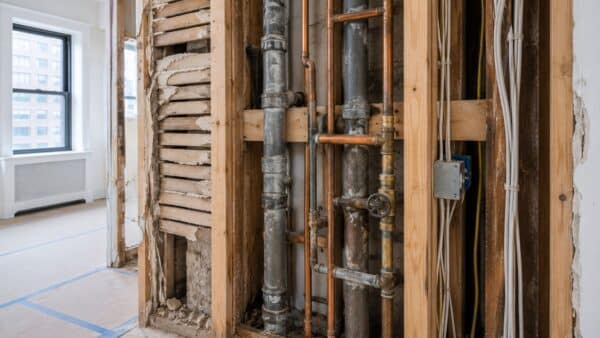
Pre-war co-ops have character: high ceilings, plaster walls, solid oak floors. They also have conditions that affect your renovation budget:
- Outdated plumbing: Original galvanized or brass lines may need replacement. Your building’s risers affect what’s possible in your unit.
- Electrical limitations: Fuse boxes and 40-60 amp service can’t support modern kitchens. Panel upgrades often require Con Edison coordination and approval.
- Plaster and lath walls: Repairing or replacing these costs more than working with modern sheetrock.
- Floors without true subflooring: Sleepers over concrete create leveling challenges and acoustic requirements.
- Environmental testing: Asbestos in floor mastics or pipe insulation requires licensed investigation and potentially abatement under NYC DEP regulations. Lead paint in pre-1978 buildings must be addressed according to EPA’s Renovation, Repair and Painting Rule.
These aren’t reasons to avoid pre-war buildings. They’re reasons to work with a contractor who identifies them early and prices them honestly.
Building Logistics and Compliance Requirements
Co-ops commonly restrict work hours—typically limited to weekdays during business hours, with noisy work often further restricted. NYC’s Noise Code sets baseline limits, but individual buildings often impose stricter rules. You’ll need to schedule elevator use in advance, book debris removal, and coordinate water shut-offs with building staff.
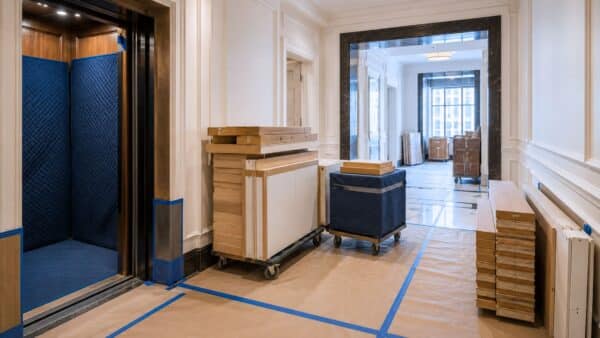
We install hallway protection before any material enters your floor. Dust containment keeps your neighbors happy and your building relationship intact. These logistics add labor time—and cost—but they’re non-negotiable in co-op living.

How to Budget for Hidden Conditions (Without Getting Surprised)
Short answer: Work with a contractor who itemizes likely extras in your proposal upfront and follows a documented change-order protocol when hidden conditions emerge. “Transparent upfront” isn’t a slogan—it’s a specific practice.
Most renovation horror stories start with a surprise bill mid-project. Pre-war buildings have conditions you can’t see until demolition begins. The question isn’t whether surprises happen—it’s how they’re handled when they do.
What “Transparent Upfront” Actually Means
When we prepare your proposal, we itemize likely extras based on what we know about your building and apartment. If your building has aging risers, we price riser work as a line item—not a vague “allowance.” If subflooring corrections are probable, they’re in the proposal with a number attached.
This isn’t pessimism. It’s honesty. You deserve to know the realistic range before you commit, not after you’re mid-demolition with no good options.
The Change-Order Protocol That Protects Your Budget
When we discover a condition that wasn’t visible before—and in pre-war buildings, this happens—here’s exactly what we do:
- Stop work on that element
- Bring you to the site to see the condition yourself
- Explain what we found and why it matters
- Provide the exact cost to address it
- Get your written approval before proceeding
- Complete the work only after you’ve signed off
Nothing gets replaced and billed without your knowledge. You see every problem before we price it, and you approve every price before we do the work.
Building a Realistic Contingency Into Your Budget
For pre-war co-ops, build 10-15% contingency into your budget. That’s not padding our profit—it’s protecting you from legitimate unknowns.
A contractor who doesn’t discuss contingency is either inexperienced or planning to surprise you later.
What’s Included in Your Renovation Quote (And What Isn’t)
Short answer: Labor covers installation and project management. Materials are separate and client-controlled. Permits and board fees are itemized. The 10-year written warranty protects your investment after completion.
Comparing renovation quotes is difficult when every contractor structures pricing differently. Here’s how to read ours—and what to ask others.
Labor vs. Materials: Understanding the Split
Our labor costs cover all installation work, project coordination, and management. Materials—your cabinets, countertops, tile, fixtures, appliances—are separate. You can purchase through our team (we handle ordering, delivery coordination, and warranty tracking) or source independently.
Why separate them? Because materials vary wildly based on your preferences, and bundling them hides the true cost of the work itself. This transparency lets you see exactly what you’re paying for labor and make informed decisions about where to invest in materials.
Permits, Fees, and Board-Related Costs
NYC Department of Buildings requires permits for layout changes, plumbing alterations, electrical upgrades, and gas work. Some buildings charge application fees. These costs are itemized in your proposal.
MyHome handles both DOB filings and building coordination. You won’t navigate city bureaucracy or chase your super for signatures. That’s our job.
What About the 10-Year Warranty?
We provide a 10-year written warranty on our work. It’s part of how we stand behind what we build. When you’re evaluating contractors, ask what warranty they offer—and get it in writing.
The Real Timeline for NYC Co-op Renovations
Short answer: Including board approval (30-60+ days) and construction (3-4+ months for full renovations), expect 5-7 months from consultation to completion. Rushing creates problems.
Most timeline frustration comes from unrealistic expectations set by contractors who want to close the deal. Here’s what actually happens.
Construction Phase by Project Type
After board approval, construction timelines vary by scope:
- Bathroom renovation: 3-4 weeks
- Kitchen renovation: 4-6 weeks
- Full apartment renovation: 3-4+ months
Pre-war conditions and building work-hour restrictions can extend these ranges. We’d rather give you a realistic timeline and finish on schedule than promise speed and deliver excuses.
The Three People You’ll Work With
From consultation to completion, you’ll work with three MyHome team members in sequence: your Renovation Expert guides initial planning, your Designer develops the layout and specifications, and your Project Manager leads construction through completion.
Your PM enters at the kickoff meeting and becomes your primary contact from there. Weekly written reports—budget tracking, schedule updates, and issue resolution—keep you informed without requiring daily site visits.
Your Next Step
You now have realistic cost ranges, an understanding of what drives pricing in co-op renovations, and a framework for protecting your budget from surprises. The next step is getting numbers specific to your apartment.
We offer a free consultation where we walk your space, discuss your goals, and identify the building-specific factors that affect your scope and budget. No pressure, no vague “it depends”—just honest conversation about what your renovation will actually involve.
Ready to get started? Schedule your free consultation today. With 25 years of experience in Manhattan and Brooklyn co-ops and a track record of never being turned down by a residential building, we’re ready to guide your renovation from first conversation to final walkthrough.


Frequently Asked Questions
How much does it cost to renovate a co-op kitchen in NYC?
Labor costs typically run $30,000–$35,000 for a co-op kitchen renovation in Manhattan or Brooklyn. Materials (cabinetry, countertops, appliances, fixtures) are additional based on your selections.
Why are co-op renovations more expensive than condo renovations?
Co-ops require alteration agreements, building staff coordination, restricted work hours, hallway protection, and more extensive documentation—all of which add labor time and compliance costs.
What happens if my contractor finds problems during demolition?
A reputable contractor will stop work, bring you to see the condition, explain the issue and exact cost to address it, get your written approval, and only then proceed. Nothing should be replaced and billed without your sign-off.
How long does a full co-op apartment renovation take in NYC?
Including board approval (30-60+ days) and construction (3-4+ months for a full renovation), expect 5-7 months from consultation to completion. Pre-war building conditions and building restrictions can extend timelines.
Sources
- Con Edison. “Electric Service Line Installation.” https://www.coned.com/en/services/electric-services/service-line-installation
- NYC Department of Environmental Protection. “Asbestos.” https://www.nyc.gov/site/dep/environment/asbestos.page
- U.S. Environmental Protection Agency. “Lead Renovation, Repair and Painting Program.” https://www.epa.gov/lead/lead-renovation-repair-and-painting-program
- NYC Department of Buildings. “Noise Code.” https://www.nyc.gov/site/dob/building-owner/noise-code.page
- NYC Department of Buildings. “Alteration Work.” https://www.nyc.gov/site/buildings/homeowner/alteration-work.page

Ofek Dahan
Ofek Dahan is the CEO of MyHome Renovation Experts, dedicated to delivering exceptional remodeling experiences through thoughtful design, quality craftsmanship, and transparent communication. He shares insights on renovation planning, industry trends, and creating homes that are both beautiful and functional for modern NYC living.
Related Posts

How to Shortlist Full-Service Firms for a Brooklyn Heights Co-op Renovation Before You Request Quotes
A pre-quote screening method for Brooklyn Heights co-op owners: evaluate renovation firms for relevant experience,...

Who Handles an NYC Apartment Renovation From Design Through Board Approval and Construction?
See what an end-to-end NYC apartment renovation partner should handle—from design and board packages to...

What Happens at a Designer-Guided NYC Renovation Showroom Appointment?
Overwhelmed by tile, stone, cabinets, and fixtures? Learn what to bring to a designer-guided NYC...