Home Planning & Renovations
You Just Bought a Manhattan Co-op That Needs a Total Renovation — Here’s Exactly Where to Start
By Yoel Piotraut
If you’re asking about Manhattan co-op renovation where to start, most renovation advice won’t help you. The guides telling you what to evaluate “before you close” are useless when you’re holding keys to an apartment that needs everything.
You’ve committed. The contract is signed. And now you’re standing in a pre-war six on the Upper West Side or a postwar classic in Gramercy with dated finishes, questionable plumbing, and a layout that hasn’t been touched since the Reagan administration.
The overwhelm you’re feeling is normal. There’s a clear sequence for working through it — and it doesn’t start with Pinterest boards or cabinet styles.
At a glance
- Choose your renovation partner first — everything downstream (board approval, permits, timeline, budget) depends on who’s managing it
- Start board approval immediately — the alteration agreement process takes 6-12 weeks and runs parallel to design
- Run design and expediting simultaneously — your team handles DOB filings while you select finishes at the showroom
- Get an itemized proposal before you commit — labor costs and likely extras should be priced upfront, not discovered mid-project
- Meet your Project Manager at kickoff — one person leads the build from that point through completion

For the whole process in one place, see our guide to co-op and condo renovation approvals in NYC: what MyHome handles, which DOB filing applies, and how long approval usually takes.
Your First Decision Isn’t Design — It’s Your Renovation Partner
Short answer: Before you choose finishes, layouts, or timelines, choose the team that will handle your building’s approval process, design, permits, and construction. Everything downstream depends on this decision.
The instinct when you walk into an apartment that needs a total renovation is to start imagining: new kitchen here, open up that wall, finally get a bathroom that doesn’t feel like 1987. But jumping into design decisions before you’ve chosen your renovation partner is like picking paint colors before you own the house.
In Manhattan co-ops — whether you’re on the Upper East Side, in Chelsea, or anywhere in between — your renovation company isn’t just the crew that swings hammers. They’re the ones who will:
- Navigate your building’s alteration agreement process
- Manage DOB filings and inspections
- Coordinate with your building’s managing agent and super
- Handle design so your selections actually work together
- Build it, manage life during construction, and stand behind the finished work
If the apartment is in Chelsea and the bathroom is part of the renovation, a bathroom renovation in Chelsea should account for the same alteration agreement, DOB filing, and building coordination steps before finishes are selected.
Choosing the wrong partner — or trying to coordinate an architect, a general contractor, a designer, and an expediter separately — creates gaps where things fall through and no one takes responsibility.
What “Full-Service” Actually Means in NYC
A full-service renovation firm handles design, permitting, board approval, and construction under one roof. You don’t hire an architect for drawings, then find a GC who interprets them differently, then manage the handoffs yourself.
At MyHome, one team takes full responsibility for your entire renovation — from the first consultation through the final quality-assurance walkthrough. We manage your building’s approval process and all DOB dealings so you never touch either one.
The Three People You’ll Actually Work With
Instead of coordinating dozens of tradespeople and specialists, you work with three MyHome team members in sequence:
- Your Renovation Expert visits your apartment, assesses the scope, and delivers an itemized proposal
- Your Designer guides material selections, creates your layout, and develops a moodboard around how you want your home to feel
- Your Project Manager leads the build from kickoff through completion, with weekly on-site meetings and written progress reports
This isn’t a call center or a rotating cast. It’s Ofek walking you through your proposal, Ben managing your selections, a PM you’ll know by name running your job site. After 25 years renovating apartments across Manhattan and Brooklyn, we’ve learned that accountability comes from relationships, not org charts.

Manhattan Co-op Renovation Where to Start: Board Approval Comes Before Design
Short answer: Your co-op board must approve your renovation before construction begins. Starting the alteration agreement process early — ideally while you’re still finalizing design — prevents months of unnecessary delay.
Most first-time renovators don’t realize that their co-op board has to approve their contractor, their scope of work, and their insurance documentation before a single wall comes down. This isn’t a formality. Buildings reject renovation applications, and when they do, your timeline resets to zero.
The alteration agreement process typically requires:
- Proof of contractor licensing and insurance
- Detailed scope of work documentation
- Neighbor notification in many buildings
- Compliance with building-specific work hours and summer rules (most Manhattan co-ops restrict work during July and August)
- Sometimes board interviews or additional deposits
This process alone can take 6-12 weeks. If you wait until after your design is finalized to start it, you’re adding months to your move-in date.
What Co-op Boards Actually Look For
Boards want to know that your renovation won’t damage the building, disturb neighbors beyond reason, or create liability exposure. They’re evaluating your contractor as much as your plans.
They look for:
- A licensed, insured contractor with co-op experience
- Clear documentation of what work will happen and where
- Insurance certificates naming the building as additional insured
- A track record of completing work without complaints or damage to common areas
Buildings on Fifth Avenue have different expectations than walk-ups in Hell’s Kitchen — but every board wants a contractor who understands their rules and respects their building.
How One Firm’s Track Record Proves the Process Is Manageable
In 25 years of renovating Manhattan and Brooklyn co-ops and condos, MyHome has never been turned down by a residential building.
That’s not a guarantee your specific board will approve your specific project — every building has its own rules and every renovation has its own scope. But it means we understand what boards need to see, we submit complete packages, and we have a track record of being the contractor buildings trust.
How long approval took on recent MyHome jobs
Kitchen and bathroom at 303 West 66th Street, a Lincoln Square co-op: seven and a half weeks from the letter of intent (10 August 2021) to the board’s conditional approval (2 October 2021). MyHome assembled the package the co-op asked for: the signed alteration agreement, three sworn affidavits, insurance certificates for MyHome and its electrical subcontractor, licensed-trade filings and drawings, then answered the board’s conditions in writing on 22 October.
Kitchen at 353 4th Avenue, Park Slope: seven weeks of condo board correspondence, from 12 January to 2 March 2022. MyHome put the job forward as cosmetic; the building’s precedent called for new branch piping to the risers, a waterproofed floor, an LAA plumbing filing and an electrical permit. The board voted to let the existing floor stay if its waterproofing could be verified, every condition was confirmed point by point in writing, and the job finished with a DOB sign-off.
The Parallel Tracks — What Happens After You Choose a Partner
Short answer: Once you sign with a renovation firm, two workstreams run simultaneously: expediting (board approval and permits) and design (measurements, selections, moodboard). They converge at your kickoff meeting when construction begins.
One of the biggest timeline mistakes is treating renovation as a sequential process: finish design, then start approvals, then begin construction. The best firms run expediting and design in parallel.
Expediting: The Building and City Paperwork
While you’re picking finishes, a dedicated team member is managing your alteration agreement, coordinating with your building’s managing agent, and handling DOB filings through the city’s online system.
You don’t log into DOB NOW. You don’t call the managing agent. You don’t track certificate of insurance renewals. This track runs in the background while you focus on the enjoyable part: designing your home.
Design: From Questionnaire to Material Selections
The design track starts with measurements of your space and a questionnaire about how you live. Do you cook? Entertain? Work from home? Need storage for a growing family?
Then you visit our Midtown showroom — model kitchens and bathrooms with thousands of material samples you can see and touch. Your designer helps you select finishes, fixtures, and fittings that work together, building a moodboard around the feeling you want in your home.
You don’t need to be “design savvy.” That’s what the designer is for.
Budgeting Before You Know the Design — How It Actually Works
Short answer: You can budget before finalizing design because labor costs are quoted upfront in an itemized proposal, with likely extras (permits, subflooring, plumbing behind walls) pre-priced before you sign.
“How can I know what this will cost if I haven’t designed it yet?” Every new co-op buyer asks this — and it’s the right question.
Labor and likely variables can be scoped from your first consultation. A full apartment renovation in Manhattan typically involves labor costs in the $120,000-$150,000 range, depending on apartment size, scope, and building complexity. Kitchens typically run $30,000-$35,000 in labor; bathrooms similar.
After your Renovation Expert walks your apartment, you receive an itemized labor proposal — not a vague estimate, but a line-by-line breakdown of what each trade will cost. The proposal also pre-prices the likely extras: permit fees, potential subflooring replacement, what happens if we open a wall and find plumbing that needs rerouting.
Our protocol is transparent upfront: if we discover something unexpected behind your walls, we stop, bring you to see it, explain what needs to happen, give you the exact price, and get your signature before proceeding. We never replace first and bill later.

Pre-War Pitfalls — What Your 1920s Co-op Is Hiding
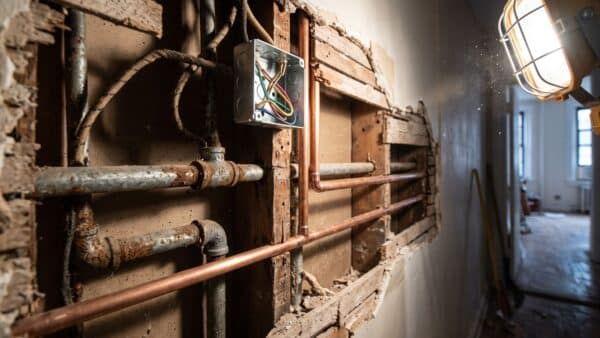
Short answer: Pre-war Manhattan apartments often contain original plumbing, outdated electrical, plaster walls, and potentially lead paint or asbestos — all manageable with proper planning and licensed contractors who follow safety protocols.
That gorgeous pre-war co-op with the high ceilings and original moldings? It’s also likely hiding:
- Original plumbing that may need updating when you touch bathrooms or kitchens
- Knob-and-tube or outdated electrical that doesn’t meet current code
- Plaster walls that behave differently than modern drywall
- Radiator constraints that limit layout options — you can’t just move a steam riser
- Lead paint in buildings constructed before 1978, which requires EPA-mandated lead-safe work practices
- Asbestos in floor tiles, pipe insulation, or other materials, regulated under NYC HPD requirements
These aren’t reasons to panic — they’re reasons to work with a firm that’s renovated hundreds of pre-war apartments from Tribeca to the Upper East Side and knows what to look for.
What MyHome found in pre-war apartments
Galley kitchen and laundry at 1192 Park Avenue, Upper East Side: when the walls opened, the pipework was corroded, so a sanitary tee was cut out of the building stack and replaced and new supply lines were run before any finish could start. The job ran about thirteen weeks on site, and cutting a 4-inch duct through the brick for a proper hood needed the building’s agreement.
Bathroom and built-ins at 789 West End Avenue, Upper West Side: the new built-ins were held to 8 feet 6 inches so they stop short of the original cove moulding, and both cabinetry runs were built in two parts because a 16-foot case will not fit in a pre-war elevator.
Living Through It vs. Waiting It Out
Short answer: Many Manhattan co-op owners live in their apartment during renovation. With proper dust containment, daily cleanup, and protected hallways, it’s uncomfortable but manageable — especially when it’s your only option.
If you just bought, you may not have anywhere else to go. Or the cost of temporary housing for a multi-month renovation in Manhattan isn’t in the budget.
Living through a renovation is doable when your contractor respects your space. At MyHome, the site is left spotless at the end of each workday. Floors, walls, and building hallways are protected. Your neighbors don’t find debris in the elevator.
This isn’t just courtesy — it’s how you maintain good standing in your building and ensure your contractor is welcome back.
How MyHome kept households living at home
Kitchen and bathroom at 160 West 66th Street, Upper West Side: the household had two bathrooms, so MyHome took only the primary back to the studs and kept a working toilet and basin in use for the whole job.
Kitchen at 40 West 105th Street, Upper West Side: Masonite and plastic went over the apartment floors, Masonite was laid from the apartment door all the way to the elevator, and the vents were covered so dust could not reach the building’s ventilation. A professional cleaning crew finished the job.


The Bottom Line — Your 5-Step Starting Sequence
You just bought a Manhattan co-op that needs a total renovation. Here’s your starting sequence:
- Choose a full-service renovation partner with NYC co-op board experience — this decision shapes everything else
- Initiate your board approval process immediately — alteration agreement, insurance certificates, scope documentation
- Begin the design track in parallel — measurements, questionnaire, showroom selections, moodboard
- Receive your itemized proposal with labor costs and likely extras priced upfront
- Attend your kickoff meeting — your Project Manager takes the lead and construction begins
The firms that help you evaluate whether to buy an apartment are useful — before you close. But you’re past that now. You need a team that takes things off your plate and executes.
Frequently Asked Questions
Should I renovate my co-op before moving in or after?
If your renovation is extensive, completing it before move-in is usually less disruptive. But many owners live through renovations successfully — especially with a firm that maintains clean sites and clear communication.
How long does co-op board approval take for a renovation?
Typically 6-12 weeks, depending on your building’s process and meeting schedule. Starting early — while design is still in progress — prevents unnecessary delays.
What is an alteration agreement and do I need one?
An alteration agreement is the contract between you and your co-op governing your renovation — scope, insurance, work hours, and contractor requirements. Most co-ops require one for any significant work. The NY Attorney General’s Real Estate Finance Bureau oversees co-op governance, and resources like The Cooperator provide detailed guidance on the process.
How do I know if a renovation company has experience with co-op boards?
Ask about their track record. How many co-op renovations have they completed? Have they ever been rejected by a board? A firm that’s “never been turned down” has proven they understand what buildings need.
Ready to Start?
You bought the apartment. Now it’s time to transform it — with a team that handles design, board approval, permits, and construction so you don’t have to manage it yourself.
MyHome has spent 25 years renovating Manhattan and Brooklyn co-ops and condos. We’ve never been turned down by a residential building. We provide an itemized proposal before you commit, weekly progress reports during construction, and a 10-year written warranty when we’re done.
Renovating in a co-op or condo? Get a free consultation.
Sources
- NYC Department of Buildings — Homeowner Alterations and Renovations: https://www.nyc.gov/site/buildings/homeowner/alterations-renovations.page
- NYC Department of Buildings — DOB NOW Online Filing System: https://www.nyc.gov/site/buildings/industry/dob-now.page
- NYC Department of Consumer and Worker Protection — Home Improvement Contractor Licensing: https://www.nyc.gov/site/dca/businesses/license-checklist-home-improvement-contractor.page
- The Cooperator — NYC Co-op and Condo Governance Resource: https://www.cooperatornews.com/
- NY Attorney General — Real Estate Finance Bureau (Co-op/Condo Oversight): https://ag.ny.gov/real-estate-finance
- EPA — Renovation, Repair, and Painting Program (Lead-Safe Work Practices): https://www.epa.gov/lead/renovation-repair-and-painting-program
- NYC HPD — Lead-Based Paint Requirements: https://www.nyc.gov/site/hpd/services-and-information/lead-based-paint.page

About the Author
Yoel Piotraut is the Founder of MyHome Renovation Experts, a New York City renovation company that has completed complete-apartment, kitchen, and bathroom renovations across Manhattan and Brooklyn for 25 years. He works closely with co-op and condo owners on building approvals, alteration agreements, and the realities of renovating occupied NYC apartments.

Yoel Piotraut
Yoel Piotraut is the Founder of MyHome Renovation Experts, a New York City renovation company that has completed complete-apartment, kitchen, and bathroom renovations across Manhattan and Brooklyn for 25 years. He works closely with co-op and condo owners on building approvals, alteration agreements, and the realities of renovating occupied NYC apartments. Connect with Yoel on LinkedIn: https://www.linkedin.com/in/yoelpiotraut/
Related Posts

How to Shortlist Full-Service Firms for a Brooklyn Heights Co-op Renovation Before You Request Quotes
A pre-quote screening method for Brooklyn Heights co-op owners: evaluate renovation firms for relevant experience,...

Who Handles an NYC Apartment Renovation From Design Through Board Approval and Construction?
See what an end-to-end NYC apartment renovation partner should handle—from design and board packages to...

What Happens at a Designer-Guided NYC Renovation Showroom Appointment?
Overwhelmed by tile, stone, cabinets, and fixtures? Learn what to bring to a designer-guided NYC...