Home Planning & Renovations
How to Hire an NYC Apartment Renovation Contractor Without Becoming the Project Manager
By Ofek Dahan
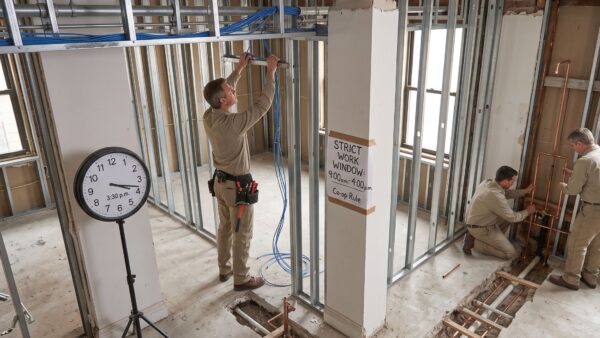
Choosing the right NYC apartment renovation contractor determines whether you spend the next six months reviewing progress photos—or chasing three different vendors who don’t talk to each other. In Manhattan and Brooklyn, the stakes are higher than anywhere else: co-op boards with three-month review cycles, DOB permits that require architect sign-off, pre-war surprises behind ninety-year-old plaster, and building work windows that shut down at 4 p.m. sharp.
This guide gives you a clear checklist for vetting any contractor you’re considering—so you can spot the firms that will handle the complexity and avoid the ones that will quietly hand it back to you.
At a glance
- Confirm board-package ownership — your contractor should prepare and submit the full alteration agreement, insurance certificates, and drawings so the board never contacts you directly.
- Verify permit handling end-to-end — DOB filings, inspection scheduling, and violation resolution belong to the contractor, not you.
- Demand a documented change-order protocol — surprises behind walls should trigger a stop-and-show process with written approval before any additional cost.
- Ask who your day-to-day contact is — a clear Renovation Expert → Designer → Project Manager relay beats a vague “founding partner on every project” promise.
- Get the warranty in writing — a 10-year written warranty protects you long after the final walk-through.

Why Hiring the Right NYC Apartment Renovation Contractor Matters More Here Than Anywhere Else
Short answer: NYC renovations require coordinating co-op or condo boards, DOB filings, building engineers, and construction crews operating under strict work-window rules. The contractor you choose either owns that coordination—or expects you to.
Most buyers underestimate how much project management a renovation demands until they’re two months in and fielding calls from the super, the architect, and the tile supplier on the same afternoon. That’s not a renovation experience. That’s a second job you didn’t apply for.
The Coordination Burden Most Buyers Don’t See Coming
In a traditional design-bid-build model, you hire an architect, then a designer, then a general contractor. Each party works under a separate contract. None of them are obligated to coordinate with the others. When the architect’s drawings don’t account for the plumbing riser location, you’re the one who notices—and then manages the fix.
Full-service renovation firms consolidate design, permitting, and construction under one contract. The difference isn’t convenience. It’s accountability. When something goes wrong, you’re not refereeing blame between three vendors. One firm owns the outcome.
That distinction matters most in NYC, where every renovation involves a building review process, DOB filings, and a board or management company watching every step.
The 8-Point Checklist for Vetting an NYC Apartment Renovation Contractor
Short answer: Before signing, confirm that the contractor prepares your board package, handles all permits, offers in-house design, follows a documented change-order protocol, assigns a clear point of contact, provides a written warranty, allows client-supplied materials, and delivers an itemized proposal.
Use these eight criteria to evaluate any firm you interview. A contractor who checks every box is set up to manage your renovation. A contractor who hedges on half of them is set up to manage you.
1. Do They Prepare and Submit Your Co-op or Condo Board Package?
Your building’s board will require an alteration agreement, proof of insurance, architectural drawings, and sometimes neighbor notifications. The process varies by building, but the stakes are consistent: submit an incomplete or noncompliant package, and your project stalls before it starts.
Ask the contractor directly: “Do you prepare and submit the board package, or do I?” A full-service firm handles every document—application, insurance certificates, drawings—so the first you hear about it is when approval comes through.
At MyHome, we’ve handled board approvals across Manhattan and Brooklyn for 25 years. Our co-op board approval process has never resulted in a rejection by a residential building.
2. Do They Handle All DOB Permits and Filings?
Most apartment renovations require permits from the NYC Department of Buildings. The filing process happens through DOB NOW, and someone has to pull permits, schedule inspections, and resolve any violations that appear.
That someone should be your contractor—not you. Ask whether they coordinate with the architect who stamps the drawings, file the applications, and manage the inspection schedule. If the answer involves you logging into DOB NOW, keep interviewing.
3. Do They Offer Design Services—or Require You to Hire Separately?
Some firms handle construction only. You arrive with finished drawings, and they execute. Other firms offer full-service renovation, including interior design, so you can have as much or as little creative input as you want.
Neither model is wrong, but you need to know which you’re signing up for. If design is included, ask how it works: Do you bring a mood board? Does a designer present options? How many revision rounds are included?
At MyHome, clients work with a dedicated designer who builds from their vision—or creates one from scratch if they prefer direction. You’re not handed off to a separate firm with a separate contract.
4. Is There a Documented Change-Order Protocol?
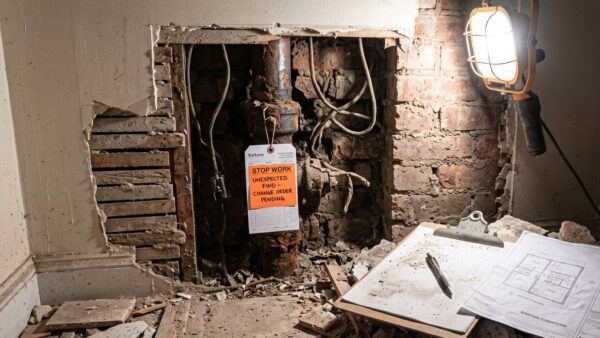
Every renovation uncovers surprises—cloth wiring behind a wall, a cracked riser, asbestos in floor tile. What matters is how those surprises get handled.
A trustworthy contractor follows a clear protocol: stop work, bring the client to see the issue, explain the reason and the exact additional cost, get the client’s written approval, then proceed. No one replaces something first and bills you later.
This is exactly how MyHome handles unexpected discoveries during construction. Likely extras—permits, subflooring, riser work—are priced in the proposal upfront. Mid-job surprises trigger the stop-and-show process before any additional money changes hands.
5. Who Is Your Day-to-Day Contact During Construction?
“You’ll have a project manager” sounds reassuring until you realize you’ve never met them and they’re assigned to six other projects. Ask for specifics: Who do I talk to during construction? When do they get involved? How often will I receive updates?
At MyHome, the delivery relay is intentional. You start with a Renovation Expert who scopes the project. A Designer takes over during design development. A Project Manager enters at the kickoff meeting and leads from there. That PM is your contact through punch list—not a rotating cast.
6. What Warranty or Guarantee Exists After the Project Ends?
A renovation doesn’t end at the final walk-through. Something might settle, a fixture might fail, a seam might open. Ask what warranty the contractor provides—and get it in writing.
MyHome offers a 10-year written warranty covering workmanship. That’s not a handshake promise. It’s a documented commitment that outlasts most contractors’ memory of your project.
7. Can You Supply Your Own Materials If You Choose?
Some contractors require you to purchase materials through them—sometimes at a markup, sometimes with limited selection. Others allow client-supplied materials but don’t assist with sourcing.
The best model is flexibility: clients can buy through the contractor’s purchasing team (often at trade discounts) or source independently. Ask which approach the firm supports—and whether there’s a markup on materials they procure.
At MyHome, clients may supply their own materials. Most choose to work with our purchasing team because it’s more convenient and passes along trade pricing, but the option exists either way.
8. Is the Proposal Itemized—or a Single Lump Sum?
A lump-sum proposal tells you what the project costs. An itemized proposal tells you what you’re getting and what each component costs. When a change order arises, you can see exactly which line item is affected.
Ask the contractor to walk you through their proposal format. If you can’t understand where your money goes, you won’t understand where it went when the project is done. For a deeper breakdown, see our guide on how to read a Manhattan renovation quote.

Red Flags That Signal You’ll End Up Managing the Project Yourself
Short answer: Watch for vague proposals, no board-approval support, “we’ll figure out pricing as we go” change-order language, no written warranty, and unclear answers about who your contact will be.
If a contractor can’t clearly explain any item on the checklist, that ambiguity will become your problem mid-project. Silence on the warranty question is a red flag. So is “the board package is pretty straightforward—you can handle it.” Any answer that shifts coordination back to you is a signal that this firm’s model requires a homeowner project manager. That homeowner will be you.
What a Full-Service NYC Apartment Renovation Actually Includes
Short answer: Scope varies by project type, but full-service means the firm handles design, procurement, permitting, and construction under one contract. Typical labor ranges run $30–35K for a kitchen, $32–35K for a bathroom, and $120–150K for a full apartment gut renovation. Final pricing depends on scope, finishes, and building requirements.
Kitchen Renovation Scope
A full kitchen renovation typically includes cabinetry, countertops, backsplash, sink and faucet, appliances, lighting, flooring, and any electrical or plumbing upgrades required. Permit scope depends on whether you’re relocating gas or adding circuits. Typical labor in NYC runs approximately $30,000–$35,000.
Bathroom Renovation Scope
Bathroom renovations cover fixtures (toilet, vanity, tub or shower), tile, waterproofing, plumbing rough-in, and electrical for lighting and ventilation. If you’re on a riser that needs work, that’s an additional scope item. Typical labor runs approximately $32,000–$35,000.
Full Apartment Gut Renovation Scope
A gut renovation takes the apartment down to studs and rebuilds: demolition, framing, electrical, plumbing, HVAC, insulation, drywall, flooring, finishes, and final inspections. It’s the most comprehensive scope—and the one where coordination matters most. Typical labor runs approximately $120,000–$150,000 for a standard two-bedroom.
How Long the Process Takes (And What Affects the Timeline)
Short answer: Planning and pre-construction typically run 90–120 days; construction runs 4–6 months for an average two-bedroom apartment. The biggest variable is your building’s approval process.
Board review culture varies widely. Some condos approve in two weeks; some co-ops require three board meetings over two months. Landmark buildings add LPC review on top of DOB. Work-window restrictions—when crews can operate—also shift timelines; Brooklyn buildings often permit longer daily hours than Manhattan co-ops.
For a full breakdown, see our NYC renovation timeline guide.
The Questions You Should Ask Before Signing a Contract
Here’s the checklist as a script for your consultation meeting:
- Do you prepare and submit my co-op or condo board package?
- Do you handle all DOB permits and filings?
- Is design included, and how does the process work?
- What happens if you find something unexpected behind the walls?
- Who is my day-to-day contact during construction, and when do they get involved?
- What warranty do you provide after the project ends?
- Can I supply my own materials if I choose?
- Is the proposal itemized so I can see where every dollar goes?
A contractor who answers every question clearly—without hedging or redirecting responsibility—is positioned to run your project. One who deflects is positioned to delegate it back to you.

Ready to See How MyHome Answers Every Question on the Checklist?
We’ve spent 25 years renovating apartments across Manhattan and Brooklyn—kitchens, bathrooms, full gut renovations in co-ops, condos, and pre-war buildings. Our process is built around a simple premise: you shouldn’t have to become the project manager to get your apartment renovated.
Book a free consultation and walk through your project with our team. We’ll answer every checklist question, review your building’s specific requirements, and give you a written proposal outlining the recommended scope of work and pricing—no obligation either way.
Sources
- MyHome About Page (25 years in business): https://www.myhomeus.com/about/
- NYC Co-op Board Approval Process: https://www.myhomeus.com/blog/nyc-co-op-board-approval-renovation-guide/
- DOB NOW Filing for NYC Renovations: https://www.myhomeus.com/blog/blog-dob-now-filing-nyc-renovations/
- NYC Renovation Change Order Process: https://www.myhomeus.com/blog/nyc-renovation-change-order-process/
- MyHome 10-Year Warranty: https://www.myhomeus.com/warranty/
- How to Read a Manhattan Renovation Quote: https://www.myhomeus.com/blog/how-to-read-manhattan-renovation-quote/
- NYC Renovation Timeline Guide: https://www.myhomeus.com/blog/nyc-renovation-timeline-our-guide-to-schedules-and-approvals/

Ofek Dahan
Ofek Dahan is the CEO of MyHome Renovation Experts, dedicated to delivering exceptional remodeling experiences through thoughtful design, quality craftsmanship, and transparent communication. He shares insights on renovation planning, industry trends, and creating homes that are both beautiful and functional for modern NYC living.
Related Posts

How to Shortlist Full-Service Firms for a Brooklyn Heights Co-op Renovation Before You Request Quotes
A pre-quote screening method for Brooklyn Heights co-op owners: evaluate renovation firms for relevant experience,...

Who Handles an NYC Apartment Renovation From Design Through Board Approval and Construction?
See what an end-to-end NYC apartment renovation partner should handle—from design and board packages to...

What Happens at a Designer-Guided NYC Renovation Showroom Appointment?
Overwhelmed by tile, stone, cabinets, and fixtures? Learn what to bring to a designer-guided NYC...