Home Planning & Renovations
How NYC Apartment Renovation Contractors Handle Change Orders—And How to Protect Yourself
By Ofek Dahan
NYC apartment renovation change orders are the moment of truth in any contractor relationship. Not whether they happen—they will—but how your contractor handles them when they do. The difference between a transparent process and an opaque one can mean tens of thousands of dollars and months of stress.
If you’re planning a renovation in Manhattan or Brooklyn, understanding change orders before you sign a contract is the single most important thing you can do to protect your budget.
At a glance
- Expect surprises in pre-war buildings — most NYC apartments date to before 1950, making hidden conditions like asbestos, cloth wiring, and plumbing decay nearly universal discoveries during gut renovations.
- Demand a defined change-order protocol — transparent contractors price likely extras upfront and follow a stop-show-sign process for genuine surprises, so you see and approve every cost before work proceeds.
- Ask the five questions before signing — how a contractor answers questions about change-order documentation, client approval, and warranty coverage reveals whether you’re hiring a partner or walking into a cost trap.
- Verify accountability structures — weekly written reports, a named project manager, and a written warranty provide protection beyond the change-order clause itself.
- Schedule a consultation to see the process in writing — reviewing the actual proposal structure and change-order language before you commit is the best protection available.
Why Change Orders Are the Real Test of a NYC Renovation Contractor
The short answer: Every contractor promises quality work. The real test is what happens when something unexpected appears behind your walls. A contractor’s change-order process reveals whether you’re working with a transparent partner or walking into a cost-overrun trap.
What a Change Order Actually Is
A change order is a formal amendment to your original renovation contract. It authorizes additional scope, cost, and timeline beyond what you initially agreed to. Change orders differ from design revisions—where you decide you want different tile—or punch-list items at project end. They address conditions that couldn’t be known until construction began.
When your contractor opens a wall and finds deteriorated plumbing, insufficient electrical capacity, or structural issues, that discovery triggers a change order if it requires work outside the original scope.
Why NYC Apartments Guarantee Surprises
The median year of construction for housing units in New York City is 1949, with a significant portion of Manhattan and Brooklyn housing stock dating to before 1940. That age means nearly every gut renovation uncovers conditions invisible during planning.
Common discoveries include:
- Asbestos in insulation, flooring adhesive, or pipe wrapping—materials widely used in construction until the late 1970s
- Cloth wiring that predates modern electrical codes
- Lead paint in homes built before 1978
- Deteriorated plumbing risers requiring building coordination
- Subflooring damage hidden beneath finished floors
- Structural deficiencies masked by decades of cosmetic updates
None of these are contractor failures. They’re the reality of renovating pre-war buildings. The question isn’t whether you’ll face surprises. It’s whether your contractor has a process that protects you when they appear.
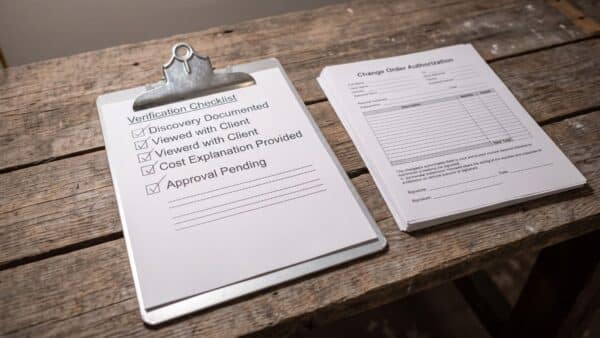
How NYC Apartment Renovation Change Orders Get Handled: Transparent vs. Opaque
The short answer: Transparent contractors price likely extras in your initial proposal and follow a stop-show-sign protocol for genuine surprises. Opaque contractors give vague assurances and bill you after the fact. Knowing the difference before you sign is everything.
What a Transparent Process Looks Like
A transparent process for NYC apartment renovation change orders has two components.
First, the contractor prices likely extras in your initial proposal. Items that frequently arise—permit fees, riser access, subflooring replacement, electrical panel upgrades—appear as line items or allowances before you sign. You see the range upfront, not after demo.
Second, the contractor follows a defined protocol for genuine surprises. At MyHome, we call this the stop-show-sign protocol:
- Stop. Work on the affected area halts immediately.
- Show. We bring you to the apartment to see the issue in person—not photos, not descriptions. You look at the actual condition.
- Explain. We explain what we found, why it needs to be addressed, and the exact cost to resolve it.
- Sign. You approve the additional work in writing before we proceed. No exceptions.
This protocol exists because surprises are legitimate. Billing surprises are not. You should never pay for work you didn’t see and didn’t approve.
Red Flags in Contractor Change-Order Policies
When evaluating any NYC contractor, watch for these warning signs:
- No written change-order clause in the contract
- Verbal-only pricing for additional work
- Work proceeds before client approval
- “We’ll true up at the end” approach to cost reconciliation
- Resistance to itemized proposals
- Vague language about how surprises are handled
A contractor who can’t clearly explain their change-order process before you sign won’t handle surprises transparently after you do.
How to Evaluate Any NYC Contractor’s Change-Order Process
The short answer: Bring five questions to every consultation. The answers reveal whether a contractor operates with transparency or relies on ambiguity. The right contractor welcomes these questions.
Five Questions to Ask Before You Sign
Use these with any contractor you’re considering—including us.
1. How are likely extras handled in your proposal?
The right answer: Common discoveries are priced as line items or allowances in the initial proposal.
2. What happens when you discover something unexpected mid-project?
The right answer: A defined protocol that includes stopping work, showing the client, explaining the cost, and getting written approval.
3. Will I see the issue in person before approving additional cost?
The right answer: Yes, every time. No exceptions.
4. How is change-order pricing documented and approved?
The right answer: Written change-order forms with itemized costs, signed before work proceeds.
5. What’s included in your warranty if a fix fails?
The right answer: A written warranty with defined coverage. Hesitation here is a red flag.
What the Proposal Should Include
Beyond the change-order clause, a solid proposal includes:
- Itemized allowances for common surprises
- A written change-order approval workflow
- Defined communication structure
- Warranty language with defined coverage period
If a contractor won’t put these in writing, that tells you how they’ll handle disputes later.

How MyHome Handles Change Orders—In Writing
The short answer: We price likely extras upfront, follow a stop-show-sign protocol for genuine surprises, and document everything in writing. You should never pay for work you didn’t approve.
Likely Extras Priced Upfront
Before you sign with MyHome, your proposal includes line items for discoveries that commonly appear in NYC apartments: permit fees, potential riser work, subflooring replacement, electrical panel upgrades. You see the realistic range before demo begins.
This doesn’t mean we predict every condition behind every wall. It means we’re honest about what typically arises and give you visibility into those costs before you commit.
The Stop-Show-Sign Protocol
When something genuinely unexpected appears, we follow the same four-step process every time:
- Work stops on the affected area
- We bring you to see the issue in person
- We explain the reason and provide the exact price to resolve it
- You sign approval before we proceed
We never replace first and bill later. We never proceed on verbal approval. We never surprise you with a reconciliation invoice at the end.
Weekly Written Reports and PM Accountability
Transparency doesn’t end with change orders. Throughout your renovation, you work with three people in sequence: a Renovation Expert during planning, a Designer during design development, and a Project Manager during construction. Your PM provides weekly written reports so you always know where the project stands.
Accountability requires clarity. You should always know who to contact and what’s happening on your project.
What Happens When You Don’t Ask These Questions
The short answer: Buyers who sign without understanding the change-order process often face significant cost overruns and strained contractor relationships. A 15-minute conversation before signing prevents months of conflict.
We’ve heard the same story from homeowners who come to us after difficult experiences elsewhere. A contractor promised a smooth process. The proposal looked reasonable. Then demo began, discoveries appeared, and costs escalated with minimal explanation.
By the time they realized what was happening, they were mid-project with no good options. Switching contractors mid-renovation is expensive and disruptive. Proceeding with a contractor you don’t trust is worse.
The change-order conversation takes 15 minutes. That conversation can save you months of stress and tens of thousands of dollars.
Protecting Yourself Beyond the Change-Order Clause
The short answer: Change-order transparency is essential but not sufficient. A 10-year written warranty, defined communication structure, and track record with building boards provide additional protection.
The 10-Year Written Warranty
MyHome provides a 10-year written warranty on our work. This isn’t a verbal promise—it’s documented coverage you can reference if something fails after project completion.
Board Approval Track Record
Every co-op and condo renovation in NYC requires building board approval. The process varies by building—some straightforward, others notoriously demanding.
MyHome has never been turned down by a residential building board. We handle both board approvals and city/DOB filings so you don’t touch either process. With 25 years in business serving Manhattan and Brooklyn homeowners, this track record reflects how seriously we take approvals.

Schedule a Consultation and See the Process Yourself
The best way to evaluate any contractor’s transparency is to ask the hard questions in person. We welcome them.
Schedule a free consultation with MyHome and we’ll walk you through:
- How we structure proposals, including likely extras
- Our change-order clause in writing
- The stop-show-sign protocol in practice
- Our communication structure and weekly reporting
- Our 10-year written warranty coverage
You’ll leave with a clear understanding of how we operate—and a framework for evaluating any other contractor you’re considering.
Whether we end up working together or not, you’ll be better prepared to protect yourself.
Schedule Your Free Consultation
Frequently Asked Questions
What is a change order in a renovation contract?
A change order is a formal amendment to your original contract authorizing additional scope, cost, and/or timeline beyond what was initially agreed. It requires written documentation and client approval before work proceeds.
Are change orders normal in NYC apartment renovations?
Yes. Most NYC apartments were built before 1950, and hidden conditions—asbestos, outdated wiring, plumbing decay—are common. The question isn’t whether surprises happen but how your contractor handles them.
How can I avoid surprise costs during my renovation?
Ask your contractor to price likely extras in the initial proposal. Confirm they follow a stop-show-sign protocol for genuine surprises so you see and approve every additional cost before work proceeds.
What should a change-order clause in my contract include?
A clear approval workflow, written documentation requirement, itemized pricing for additional work, and a provision that work does not proceed until you sign.
Sources
- U.S. Census Bureau. “QuickFacts: New York City, New York — Housing.” https://www.census.gov/quickfacts/fact/table/newyorkcitynewyork/HSG010222
- U.S. Environmental Protection Agency. “Learn About Asbestos.” https://www.epa.gov/asbestos/learn-about-asbestos
- U.S. Environmental Protection Agency. “Protect Your Family from Sources of Lead.” https://www.epa.gov/lead/protect-your-family-sources-lead

Ofek Dahan
Ofek Dahan is the CEO of MyHome Renovation Experts, dedicated to delivering exceptional remodeling experiences through thoughtful design, quality craftsmanship, and transparent communication. He shares insights on renovation planning, industry trends, and creating homes that are both beautiful and functional for modern NYC living.
Related Posts

How to Shortlist Full-Service Firms for a Brooklyn Heights Co-op Renovation Before You Request Quotes
A pre-quote screening method for Brooklyn Heights co-op owners: evaluate renovation firms for relevant experience,...

Who Handles an NYC Apartment Renovation From Design Through Board Approval and Construction?
See what an end-to-end NYC apartment renovation partner should handle—from design and board packages to...

What Happens at a Designer-Guided NYC Renovation Showroom Appointment?
Overwhelmed by tile, stone, cabinets, and fixtures? Learn what to bring to a designer-guided NYC...