Home Planning & Renovations
The Impact of Square Footage on Bathroom Renovation Costs: A Comprehensive Analysis
By Adam Blake
Embarking on a bathroom renovation project is an exciting endeavor for any homeowner, but it also comes with practical challenges, particularly regarding budgeting. When navigating the early design and planning phases, one of the most critical metrics you will encounter is the bathroom renovation cost per square foot.
The correlation between a project’s total bill and the physical size of the room is the foundational pillar of any remodeling budget. At MyHome US, we believe in empowering our clients with transparent, data-driven insights. This comprehensive analysis breaks down exactly how square footage dictates material needs, labor complexity, spatial design, and hidden structural costs so you can plan your dream space with confidence.
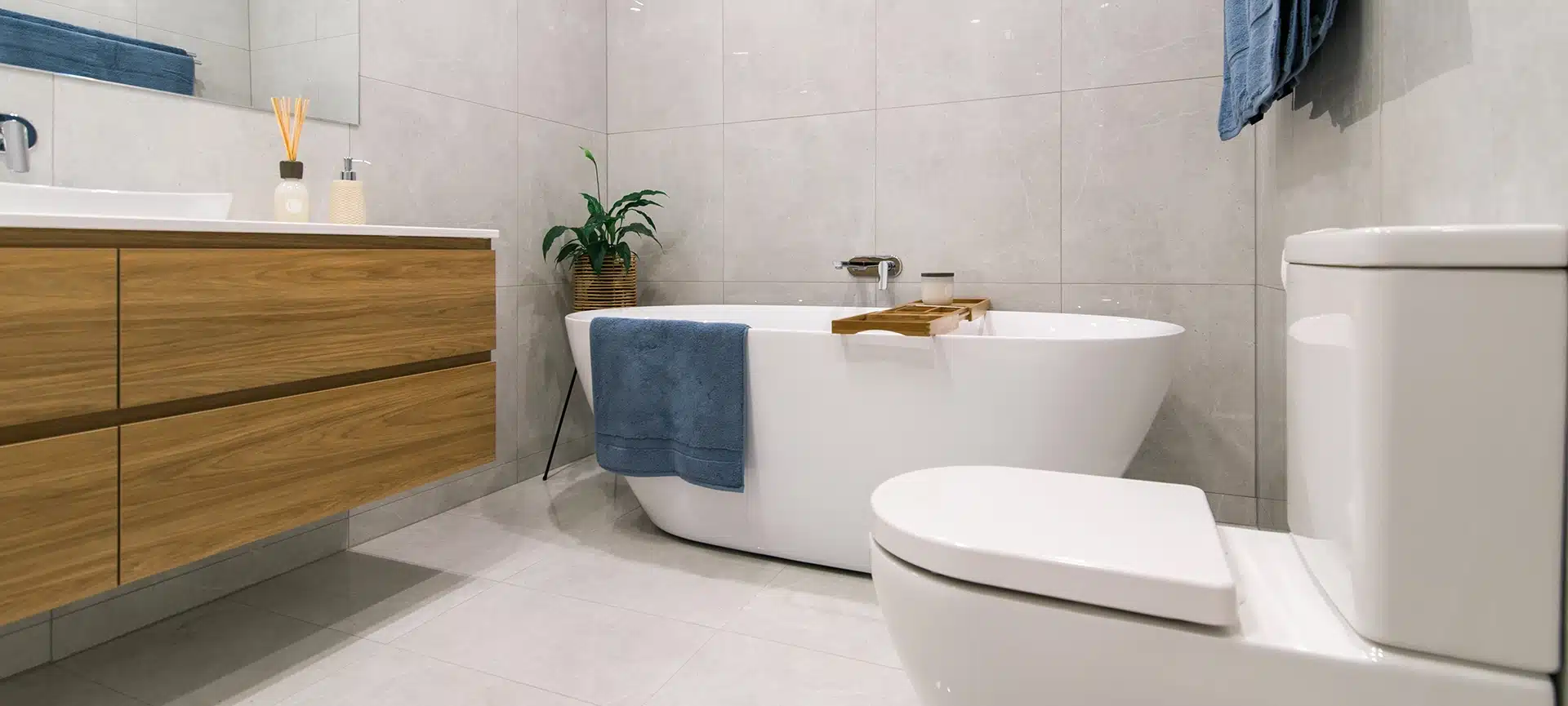
Bathroom Renovation Cost Per Square Foot: The 2026 Core Equation
Many homeowners look at a small space and assume the final price tag will be minimal. However, bathrooms are among the densest engineering ecosystems in a residential property. They require highly specialized trades—including a licensed plumber, certified electrician, and expert tile setters—all working in a tightly confined environment.
Because of this density, the smaller the bathroom, the higher the baseline cost per square foot often becomes. Fixed expenses like pulling permits, setting up insurance, and paying minimum trade call-out fees apply whether a space is 30 square feet or 150 square feet.
| Renovation Tier | Estimated Cost (Per Sq. Ft.) | Typical Project Scope |
|---|---|---|
| Budget Refresh | $80 – $150 | Surface-level cosmetic updates, paint, new hardware, and simple fixture swaps. |
| Midrange Remodel | $200 – $350 | Full gut renovation down to the studs, brand-new standard fixtures, keeping the original layout. |
| High-End / Luxury | $400 – $750+ | Premium custom finishes, structural wall changes, layout reconfigurations, and smart technology. |
While calculating expenses on a per-square-foot basis provides an excellent starting benchmark, a true detailed budget must factor in the fixed “minimum labor thresholds” for skilled labor and municipal permit costs.
Related Article: Do You Need a Permit to Remodel a Bathroom in NYC?
Cost Breakdown by Bathroom Size and Type
The total scope of the project scales dramatically based on whether you are refreshing a simple half bath or completely gutting a grand primary suite. The structural requirements, layout flexibility, and material volume behave differently across distinct size thresholds.
1. Small Bathrooms & Powder Rooms (Up to 40 Square Feet)
A half bath/powder room or a compact three-piece guest bath requires strategic design to maximize spatial utility. These spaces typically measure $5 \times 5$ feet or $5 \times 8$ feet.
The Financial Reality
Because the footprint is small, your total spend on fixtures and materials is naturally lower. You will require fewer square feet of flooring and minimal tile. A basic refresh (paint, hardware swaps, a new faucet, and a standard toilet upgrade) can stay under $5,000.
The Spatial Trap
Tearing a small bathroom down to the studs for a full bathroom remodel typically ranges from $7,000 to $18,000. Why? Because maximizing utility in under 40 square feet often demands custom solutions. Standard, off-the-shelf vanities may block door clearance, forcing homeowners to pivot to custom compact cabinetry or space-saving pedestal sinks.
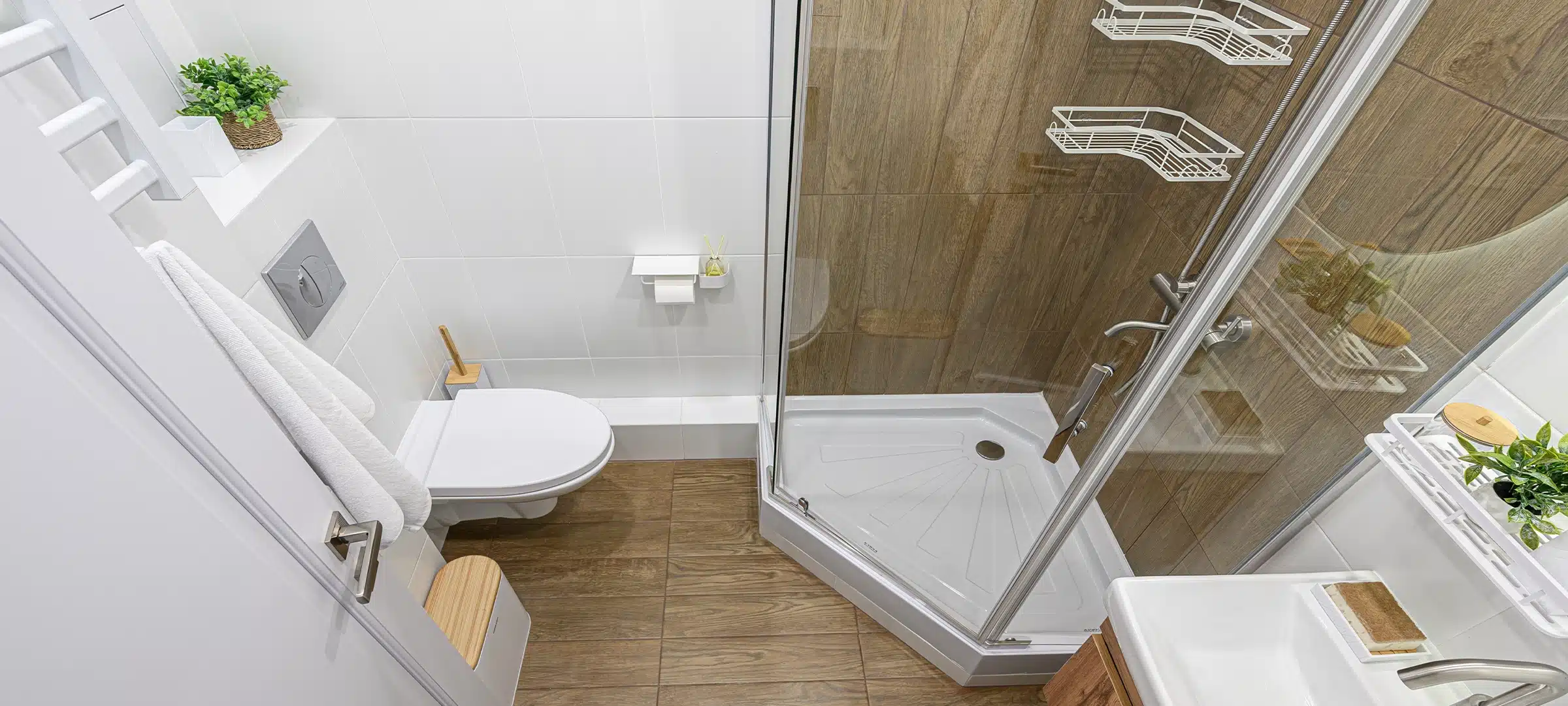
2. Medium Bathrooms (40 to 100 Square Feet)
Medium-sized bathrooms—typically standard family guest baths, Jack-and-Jill setups, or smaller primary spaces—strike a balanced compromise between layout flexibility and cost management. The most common footprint in this category is the standard $5 \times 1sys0$ foot layout.
The Financial Reality
This size allows for comfortable architectural expansions. Homeowners frequently upgrade to a larger alcove tub, an upgraded custom shower installation, or a wide single vanity with an elegant solid-surface countertop. At this scale, a professionally executed midrange remodel typically averages $15,000 to $35,000.
The Layout Factor
Medium bathrooms offer enough room to consider moving fixtures. However, changing the existing plumbing layout—such as shifting the toilet to the opposite wall or converting a standard tub into a standalone, curbless walk-in shower—requires cutting through subfloors and rerouting main waste stacks. This structural reconfiguration can quickly add $3,000 to $7,000 to your plumbing line-item expenses.
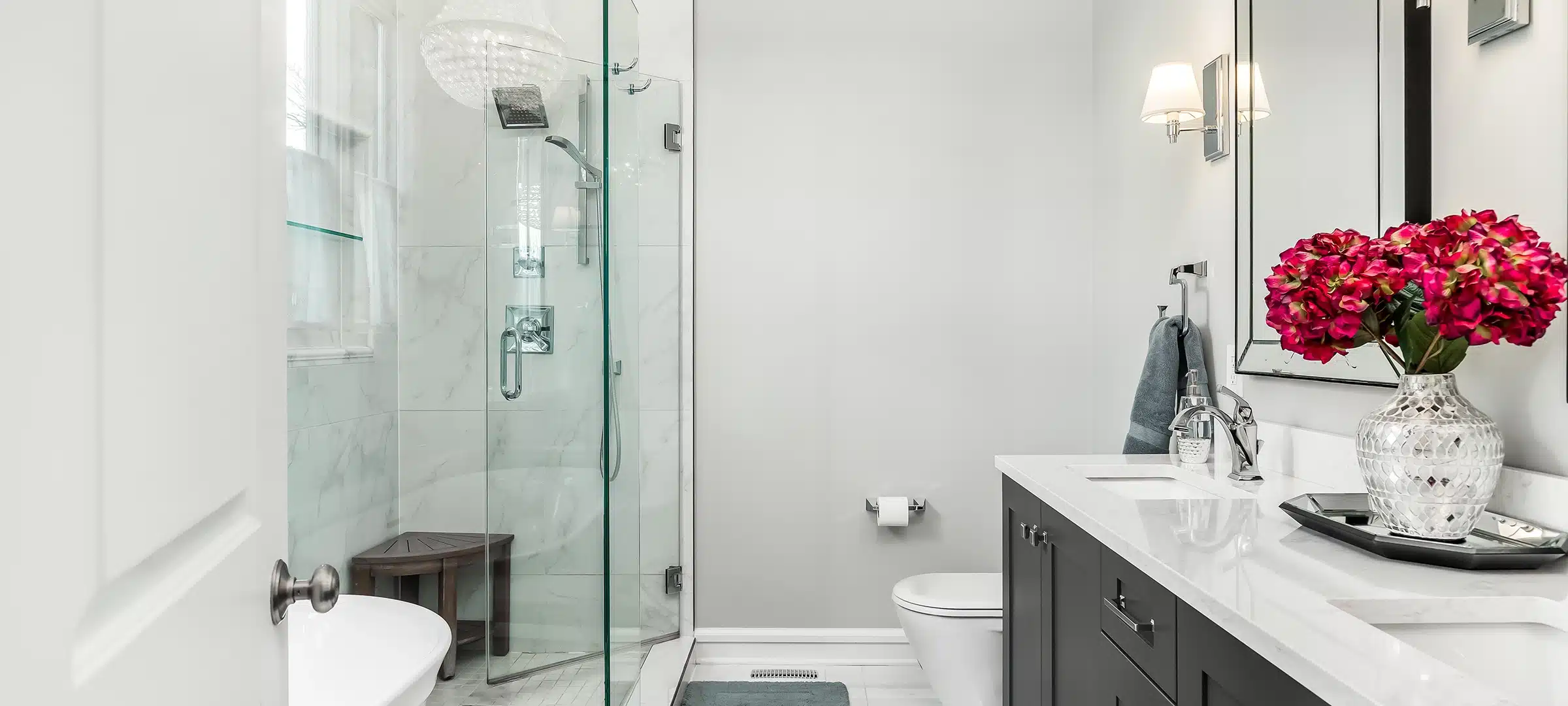
3. Large & Primary Bathrooms (Over 100 Square Feet)
Large primary bathrooms afford structural luxury, but their financial scope rises exponentially with every additional square foot. These are spaces designed for comfort, relaxation, and high design value.
The Financial Reality
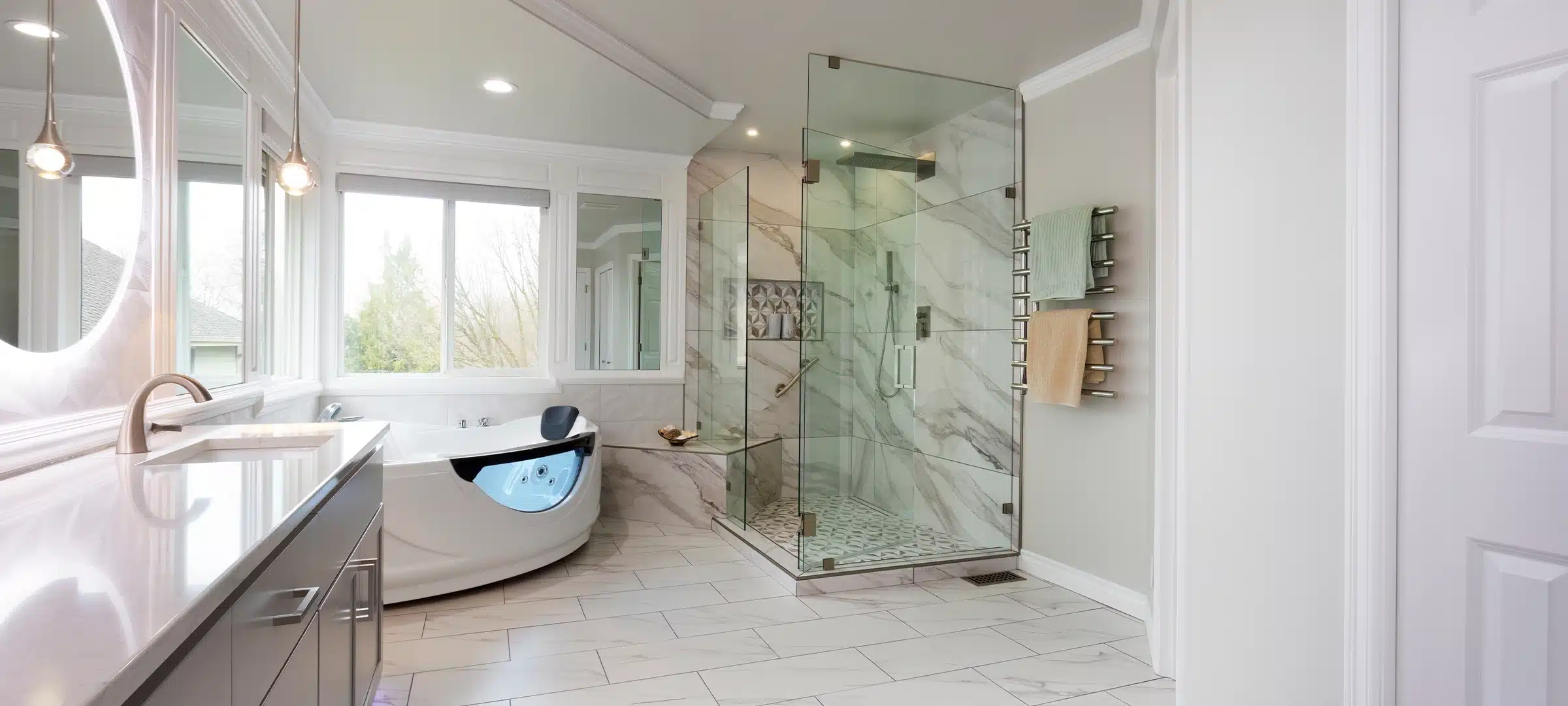
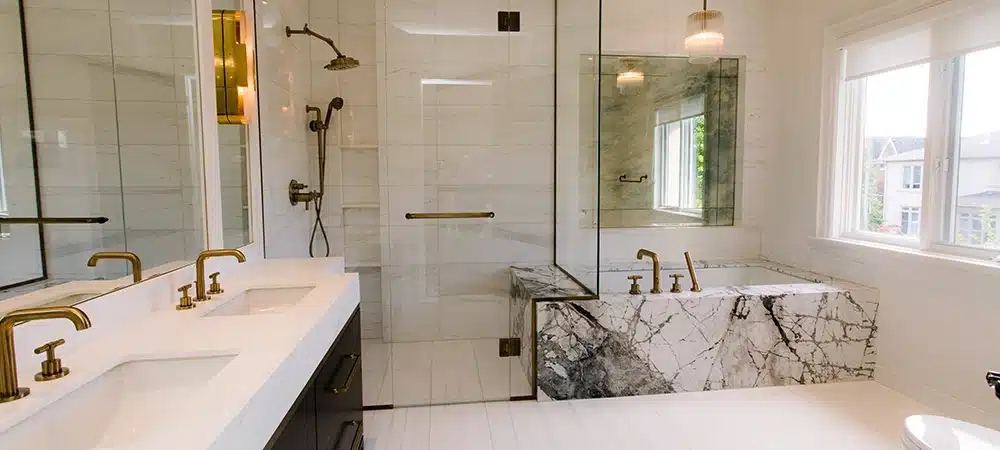
Large spaces allow you to craft a true home spa-like retreat, incorporating extensive features such as double vanities, sprawling floor-to-ceiling natural stone tiling, custom architectural millwork, dedicated makeup areas, and a private water closet. High-end remodels and upscale primary suites frequently command $40,000 to $90,000+.
The Premium Multiplier
When you are sourcing premium materials for a massive footprint—such as wrapping a whole wet area in book-matched marble or installing a heavy freestanding bathtub installation—the baseline material costs quickly eclipse standard budgets. Additionally, specialized climate additions like a comprehensive radiant floor heat installation scale symmetrically with square footage. Laying heating mats and self-leveling underlayment across a 120-square-foot room requires substantially more material and specialized electrical modifications than a small accent zone.
Major Cost Contributors and Finish Levels
The overall cost of your renovation depends heavily on the scale of your square footage multiplied by your chosen finish level. It is the combination of the room’s physical dimensions and the quality tier of the selections that determines the final trajectory of your budget.
| Material / Component | Basic / Cosmetic Refresh | Midrange Remodel Options | High-End / Luxury Upgrades |
|---|---|---|---|
| Flooring | Standard linoleum flooring or luxury vinyl tile | Durable porcelain tile flooring or ceramic layouts | Sprawling natural stone tiling (marble, quartzite, granite) |
| Showering & Tubs | Surface reglazing or prefabricated acrylic insert | New alcove tub or a classic tiled walk-in shower | Frameless glass shower enclosures, walk-in tubs, or digital shower systems |
| Vanity & Tops | Paint existing base, swap hardware | Pre-fabricated bathroom vanity with stone top | Bespoke custom cabinetry with premium quartzite or marble |
| Fixtures | Standard chrome replacement faucets | Brand-name finishes, low-flow toilets, matching hardware | Smart toilets, touchless water-saving faucets, luxury rain heads |
| Lighting & Tech | Simple swap of existing light fixtures | New LED lighting, updated vanity fixtures | Integrated smart mirrors, voice-activated lighting, and moisture sensors |
| Comfort Systems | Baseboard heating standard | Standard ventilation upgrade | Comfort radiant floor heating, towel warmers |
Detailed Macro-Component Cost Analysis
To truly manage a detailed budget, it is helpful to look past the general square footage pricing and look at how the physical components of the room consume resources. Every major system inside the bathroom has its own cost logic, heavily influenced by the size of the room.
Plumbing and Drainage Upgrades
Plumbing work represents the core infrastructure of any bathroom. In a standard gut remodel where fixtures stay in their exact physical locations, plumbing labor focuses on updating older pipes to code, changing out valves, and installing new trim.
However, if your square footage allows for a complete structural redesign, the plumbing costs escalate. Introducing a double vanity means running secondary waste and supply lines. Moving a shower requires adjusting the slope of the drain line through structural floor joists. If your home has cast iron pipes that require updating to modern PVC, plumbing upgrades can account for up to 20% to 25% of the total budget.
Cabinetry, Vanities, and Storage
The volume of bathroom cabinetry you introduce is directly proportional to the available square footage. In a small powder room, storage is often a minimalist affair. In a large primary bathroom, storage becomes a design focal point.
- Stock Vanities: Available in standard sizes (24, 30, 36, 48, and 60 inches), these offer a cost-effective solution for small-to-medium rooms.
- Custom Cabinetry: For large luxury spaces, custom built-ins provide personalized configurations for linens, integrated laundry hampers, and electrical outlets inside drawers for styling tools. Upgrading to custom furniture-grade vanities and specialized bathroom countertops drastically increases material allocations but secures high aesthetic returns.
The Wet Area: Showers, Tubs, and Waterproofing
The “wet area” is the most expensive zone to construct per square foot. Proper moisture management systems and waterproofing requirements are non-negotiable elements that safeguard your home from hidden mold and rot.
- Material Selection: Sourcing premium tile for a large walk-in shower conversion demands significant financial investment. Beyond the visible tile, the cost includes advanced sheet membranes or liquid waterproofing elements behind the walls.
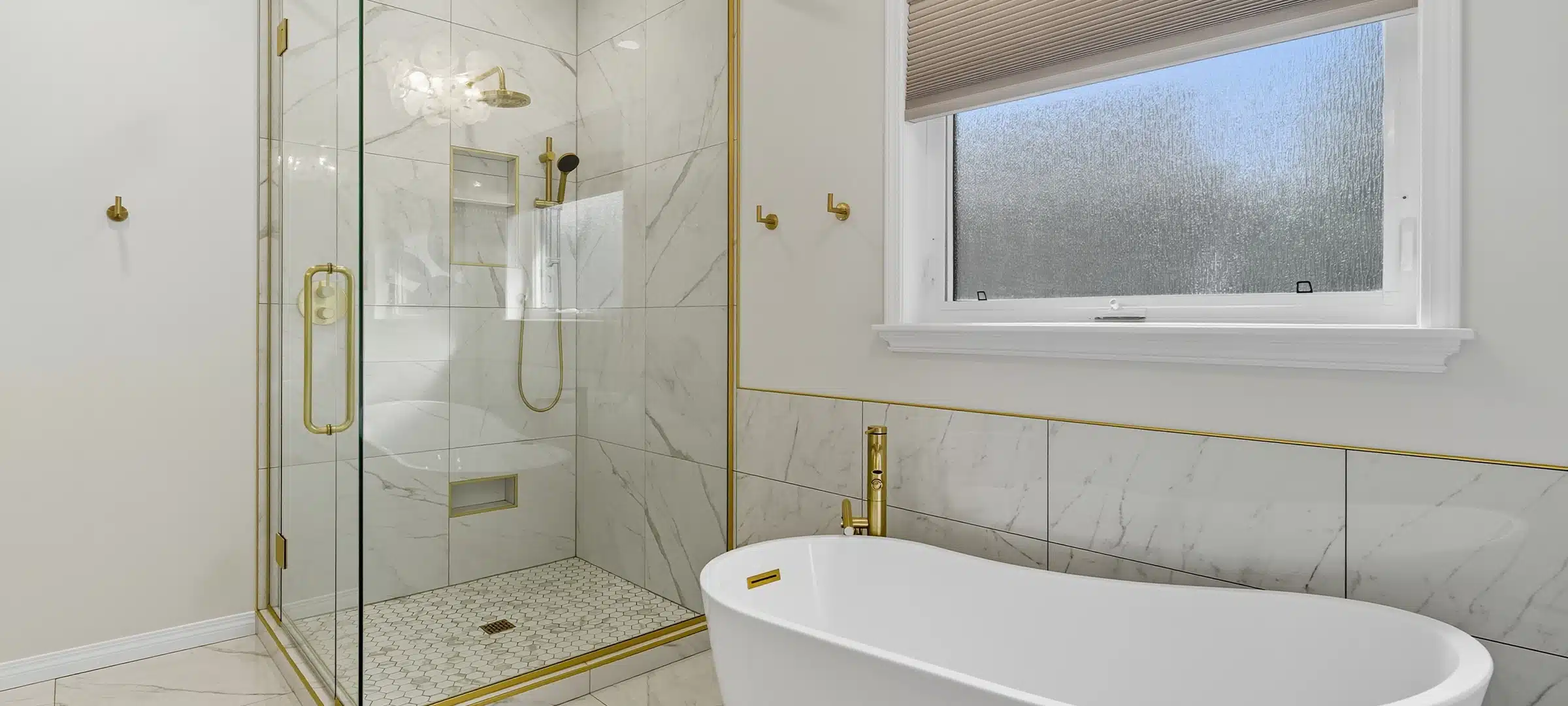
- Glass Enclosures: A custom frameless glass shower enclosure requires thick, tempered glass precisely measured and installed by specialists. If you choose a zero-entry shower or a roll-in shower layout, structural floor modifications are required to sink the shower pan level with the bathroom floor, increasing labor requirements.
Related Article: Shower Designs To Take Your Bathroom From Drab To Stunning
Common Hidden Costs and Unexpected Expenses
When opening up old bathroom walls, the physical square footage of the room acts as a multiplier for potential structural complications. A larger floor footprint means a higher probability of discovering historic problems left behind by previous builders or slow, undetected leaks.
1. Hidden Water Damage and Structural Issues
Bathrooms are constantly exposed to moisture. It is incredibly common to remove an old bathtub or pull up dated tiling only to discover soft, rotted subfloors, rusted framing nails, or structural joists that have been compromised by historic leaks. Repairing structural subfloors or replacing rotted wall studs cannot be skipped, and these structural repairs must be addressed before any new materials are installed.
2. Demolition Fees and Material Disposal
Tearing out an old bathroom is a labor-intensive process. Demolition crews must meticulously remove heavy materials—such as old mortar beds, wire lath, cast-iron bathtubs, and thick ceramic backing—without damaging adjacent rooms or core utilities. Demolition services also incur substantial material disposal fees, dumpster rentals, and, in urban environments like New York, specialized building access fees and strict property protection requirements.
3. Electrical Upgrades and Ventilation Requirements
Older bathrooms often fail to meet modern electrical safety standards. Modern building codes mandate that bathrooms operate on dedicated, moisture-protected 20-amp GFCI (Ground Fault Circuit Interrupter) circuits to safely power high-draw appliances like hair dryers.
Furthermore, ventilation requirements have become far more stringent. Automated fans triggered by moisture sensors are increasingly common to protect new investments from humidity damage. Ensuring proper ducting paths out to the exterior of the home (rather than venting directly into an attic or ceiling plenum) often introduces unexpected HVAC costs.
The Contingency Rule: Never plan a bathroom budget down to the final penny. At MyHome US, we advise all clients to establish a dedicated, liquid contingency fund representing 15% to 20% of their overall contract value. This ensures that if unexpected expenses or backordered materials appear, the project can move forward without financial delays.
DIY vs. Professional Renovation Costs: Assessing the True Value
With an abundance of home improvement tutorials online, many homeowners wonder if tackling a bathroom remodel as a do-it-yourself project is a viable path to saving money. Understanding where you can safely save and where you must invest in professional expertise is vital.
The Challenges of DIY Remodeling
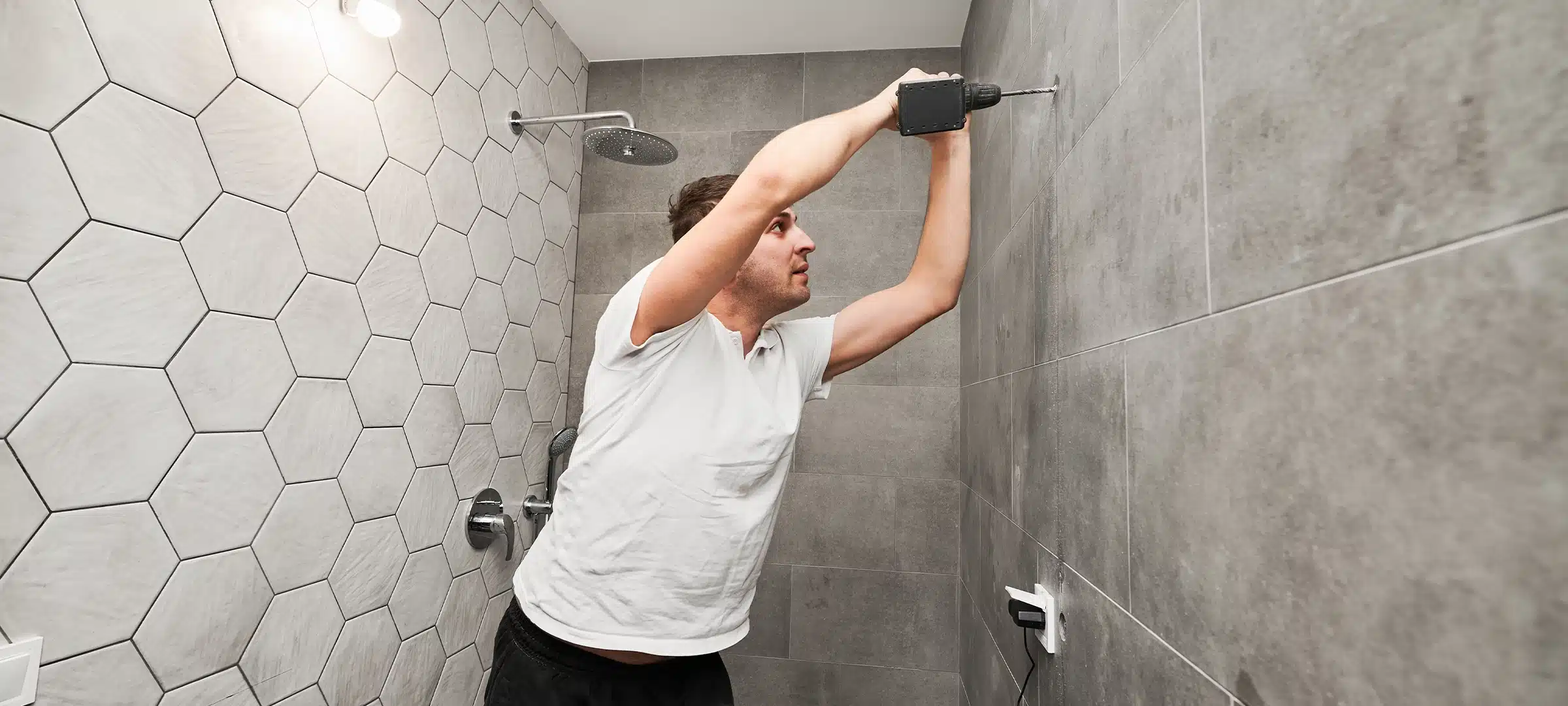
While you can save on upfront labor costs by purchasing materials directly at home improvement store prices, the risks of DIY bathroom remodeling are substantial:
- Specialty Tool Investment: Properly installing a modern bathroom requires an array of expensive gear, from professional tile wet saws and PEX pipe crimping tools to specialized plumbing torches. Tool rentals and purchasing single-use equipment quickly erode your perceived savings.
- Material Waste: Inexperienced cutting of expensive tiles, stone counters, or waterproofing sheets can result in high material waste factors, forcing you to purchase excess product.
- The Risk of Failure: If a DIY tile installation fails to achieve proper waterproofing, an undetected slow leak behind a shower wall can cause thousands of dollars in structural rot, ruining your hard work and forcing an eventual professional gut remodel anyway.
The Professional Advantage
Hiring an established general contractor brings peace of mind, speed, and structural security to your investment.
| Core Management Area | Professional Advantage | Long-Term Security |
|---|---|---|
| Project Management | Provides a single dedicated point of contact to coordinate all material deliveries, timelines, and specialized trades. | Minimizes downtime and costly scheduling delays. |
| Industry Trade Access | Delivers fully vetted, on-demand access to a licensed plumber, certified electrician, and professional tile setters. | Eliminates the stress of sourcing unverified subcontractors. |
| Legal & Regulatory Safety | Completely handles municipal permit costs, structural engineering reports, and modern building codes. | Protects your home’s resale value and structural insurance eligibility. |
| Financial Security | Fully outlines and protects your physical investment through a binding, itemized contractor agreement. | Backed by a clear, dependable structural and labor warranty. |
Related Article: Pros and Cons of DIY Bathroom Renovations
Strategic Financing and Long-Term Value
A premium bathroom renovation is a major asset investment that yields substantial personal and financial dividends. Understanding your funding avenues and long-term resale metrics allows you to spend confidently.
Tailored Financing Options
Few homeowners pay for a full luxury gut renovation entirely with liquid cash or savings. Exploring flexible financing can help preserve your liquidity while ensuring you don’t cut corners on essential structural quality:
- Home Equity Line of Credit (HELOC): A highly popular choice for major renovations, a HELOC allows you to borrow against the equity of your home at lower interest rates compared to unsecured personal lending structures.
- Home Equity Loans: This provides a lump-sum payout with fixed interest rates and predictable monthly payments, making it easy to track against an itemized list of renovation costs.
- Personal Loans: Ideal for smaller to mid-sized projects, personal construction loans offer fast approval times without requiring your home as collateral.
- Rewards Credit Cards: For minor cosmetic refreshes or material purchases, utilizing premium credit cards can yield significant travel points or cash-back perks, provided the balance is cleared promptly to avoid high interest charges.
Return on Investment (ROI) and Resale Power
According to trusted industry indexes like the annual Cost vs. Value Report, a bathroom renovation remains one of the highest-returning home improvement projects you can undertake. A beautifully updated, modern bathroom drastically increases home resale value and makes a property stand out to buyers.
- Midrange Remodel ROI: Typically yields a 60% to 70% return on your investment at resale.
- Upscale Remodel ROI: Offers an impressive aesthetic transformation and yields a steady 55% to 65% return, while modern accessibility upgrades (like ADA-compliant toilets and curbless showers) increasingly attract a wider pool of future buyers.
Practical Money-Saving Strategies for Homeowners
If you are looking for smart cost-cutting strategies to bring your projected estimate down without sacrificing structural integrity or design vision, consider these professional planning tips:
1. Maintain the Existing Plumbing Footprint
The absolute easiest way to keep your bathroom renovation costs low is to avoid relocating your toilet, sink, tub, or shower main drains. Leaving the core infrastructure in place saves your team from opening up structural walls, drilling through joists, and rerouting complex ventilation lines.
2. Refinish and Refresh Instead of Tearing Down
If your layout works well and your existing bathtub or vintage wall tile is structurally sound but simply the wrong color, look into professional resurfacing or reglazing options. Refinishing existing fixtures can make aged cast iron or porcelain look brand new for a fraction of the cost of total replacement and disposal.
3. Smart Cosmetic Swaps
You can achieve a high-end look by focusing your premium spending where it matters most:
- Paint your walls and ceilings with high-quality, anti-microbial paint rather than tiling every surface floor-to-ceiling.
- Use a cost-effective, durable porcelain tile across the main floor, and save your luxury natural stone or intricate mosaic tile for a smaller feature accent strip in the shower.
- Keep your existing vanity structure if it is solid wood, and simply update the cabinet doors, paint color, and hardware for a modern look.
Future Trends and Market Outlook: The Smart Bathroom Evolution
As we move through 2026, the bathroom remodeling market is experiencing exciting shifts driven by design innovation and smart technology. Incorporating forward-looking elements can extend the relevance of your space for years to come:
- Eco-Efficiency and Water Conservation: Sustainable, modern homes prioritize low-consumption fixtures. Upgrading to advanced low-flow toilets, intelligent dual-flush mechanisms, and aerated faucets reduces monthly utility bills while appealing directly to modern home buyers.
- Smart Bathroom Technology: Technology has moved far past simple gadgets. Modern high-end bathrooms regularly feature integrated smart mirrors with anti-fog technology, automated LED lighting tracks that adapt to circadian rhythms, and digital showering systems that let you preset your preferred water temperature from your smartphone.
- Advanced Hygiene and Material Science: Homeowners are looking for surfaces that are easy to clean. Antimicrobial grout membranes, non-porous engineered quartz counters, and self-cleaning smart toilets with touchless functionality are standard luxury requests.
Related Article: Key Features to Include in Your Custom Bathroom Remodel
Begin Your Bathroom Renovation Journey with MyHome US
The physical square footage of your bathroom is the single biggest factor dictating your total renovation budget. By understanding how size serves as a baseline multiplier for labor, materials, and hidden structural compliance, you can approach the planning process with a strategic roadmap.
At MyHome US, we are dedicated to guiding you through every step of your renovation journey. Our fully integrated design-build process brings your custom design solutions, material selection guidance, and comprehensive project management together under one roof. We help you balance your aesthetic vision with transparent, detailed cost estimates tailored to your unique footprint, style, and financial goals.
Ready to transform your space? If you are searching for a premier bathroom remodeling contractor in New York, contact the MyHome US team today at 212.666.2888 to schedule your comprehensive design consultation, or visit our state-of-the-art showroom to explore our material options and speak directly with our project management experts.
Frequently Asked Questions
How long does a typical bathroom renovation take to complete?
While timelines scale with the total square footage and complexity of the project, a standard midrange gut remodel generally takes 3 to 5 weeks of active construction. Large luxury primary bathrooms involving structural modifications, intricate custom tile work, or layout changes can take 6 to 8 weeks from initial demolition to final walkthrough. Read about how long a bathroom remodel takes with MyHome remodeling experts.
Why is the cost per square foot higher for a small bathroom than for a large one?
Small bathrooms require the same expensive foundational elements as large ones, including a licensed plumber, professional waterproofing, and electrical updates. Because these fixed overhead costs and minimum trade labor fees are distributed over a much smaller physical footprint, the resulting cost per square foot appears higher, even though the total overall project cost is lower.
Do I need to obtain city permits for a bathroom cosmetic refresh?
If your renovation scope is purely cosmetic—such as painting, changing standard floor tile, replacing light fixtures, or swapping out an existing vanity—you generally do not require a formal municipal building permit. However, if your project involves opening up walls, running new structural plumbing lines, updating electrical panels, or modifying structural framing, securing a NYC building permit is mandatory to ensure code safety and protect your home’s insurance eligibility.

Adam Blake
Adam Blake is Design Manager at MyHome Renovation Experts, known for blending smart space planning with timeless design. With hands-on experience guiding homeowners through renovations, he understands how to transform kitchens and living spaces into highly functional, beautifully crafted environments.
Related Posts
NYC Co-op Renovation Rules: What Your Contractor Should Handle So You Don’t Have To
Learn what NYC co-op renovation rules require and what your contractor should handle—alteration agreements, board...
How to Hire an NYC Apartment Renovation Contractor Who Won’t Get Rejected by Your Board
Learn how to evaluate NYC apartment renovation contractors for co-op and condo board approval. What...

Who Handles What in Your NYC Co-op Renovation: Board, DOB, and Building Coordination Explained
Learn which NYC co-op renovation tasks fall to you vs. your contractor—board approval, DOB permits,...