Home Planning & Renovations
NYC Renovation Material Costs: Is Sourcing Yourself Really Cheaper?
By Adam Blake
Planning a remodel in New York City usually starts with one major concern: NYC renovation material costs.
In 2026, finish materials like cabinetry, flooring, and stone often account for 25% or more of a renovation budget. While sourcing materials yourself may seem like a way to avoid contractor markups, NYC logistics, from strict Co-op delivery rules to freight elevator scheduling, can quickly turn those savings into costly delays.
This guide explains the real cost of sourcing your own materials versus using a managed design-build procurement process.
Estimating Your NYC Renovation Material Costs
To build a realistic budget, you must understand how materials are categorized in a Manhattan or Brooklyn remodel.
- Hard Costs: These are the invisible materials, lumber, copper piping, BX electrical cabling, and subflooring. These are almost always provided by your contractor because they must meet strict NYC Building Codes.
- Finish Materials: These are the items you see and touch, tiles, appliances, vanities, and hardware. This is where homeowners usually attempt to source themselves to find a “deal.”
In 2026, a mid-range bathroom renovation in NYC sees material costs starting at $8,000-$15,000, while high-end kitchen materials can easily exceed $40,000, excluding labor.

Hidden Costs of DIY Material Sourcing in NYC
If you choose to buy your own materials, the price you see on a website is rarely the price you actually pay. New York City presents unique logistical hurdles that national retailers are not equipped to handle.
The “COI” and Delivery Rejection Fee
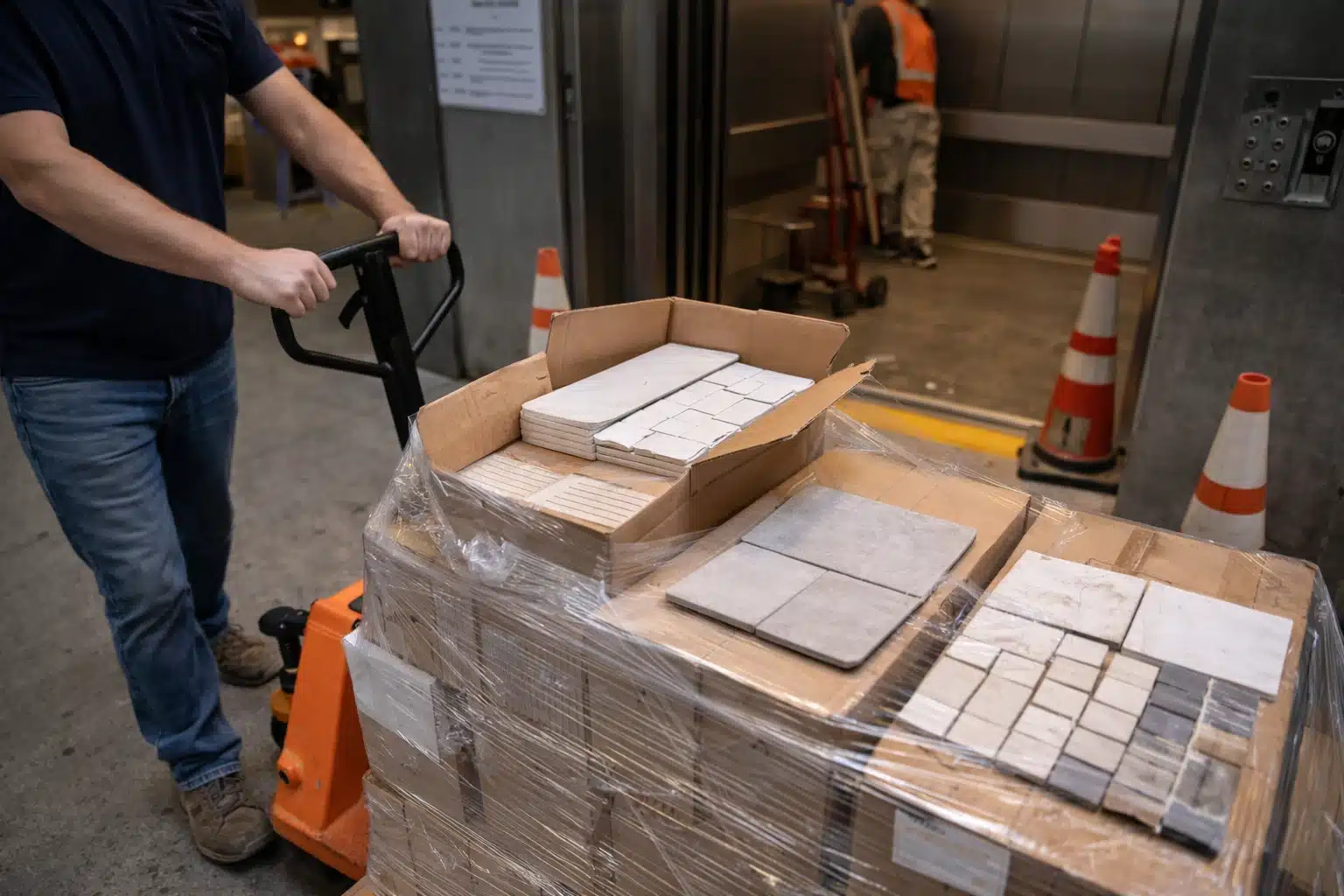
Every Manhattan Co-op and modern Brooklyn Condo requires a Certificate of Insurance (COI) from any delivery company entering the building.
- The Risk: Most online retailers use third-party freight carriers. If the driver arrives without the specific legal language required by your building manager, the doorman will turn them away.
- The Cost: You will be hit with a “re-delivery fee” (often $300+) and may lose your reserved freight elevator spot.
Freight Elevator Windows
Most buildings restrict large deliveries to a tight window, typically 10:00 AM to 2:00 PM.
- The Risk: If your homeowner-sourced delivery is late due to traffic in the Lincoln Tunnel, you lose your slot.
- The Cost: Your contractor’s team is already on-site and on the clock. If they have no materials to install, you are paying for “dead time” labor.
Accountability and the “Broken Faucet” Delay
In a suburban renovation, a damaged cabinet is an inconvenience. In an NYC apartment, it is a project-stopping catastrophe.
Imagine your plumber is scheduled for a Tuesday install, but the vanity you sourced yourself arrives with a cracked marble top.
- Work Stops: The plumber cannot proceed and will charge a “trip fee” to return later.
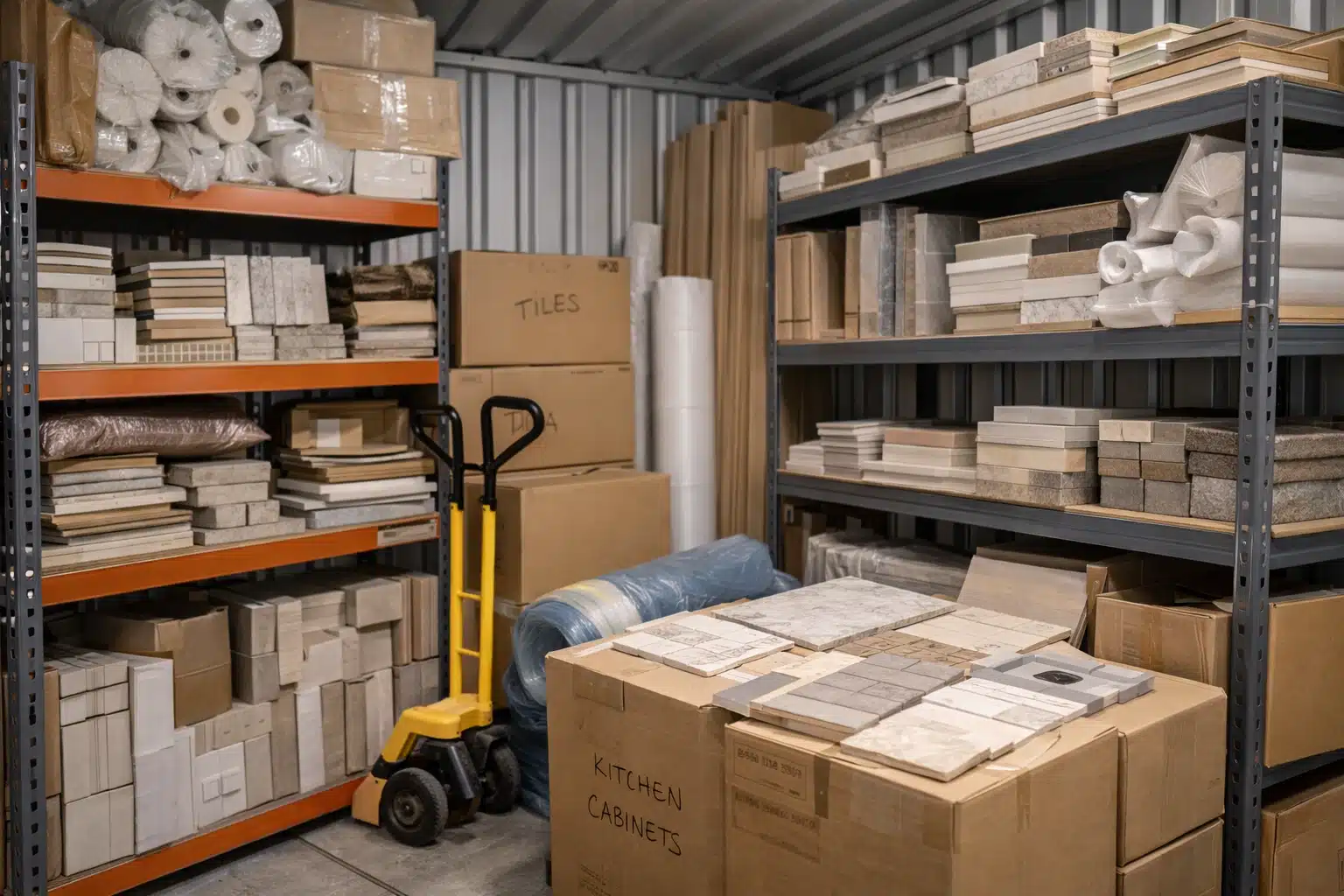
- Storage Issues: You likely don’t have room in a 900-square-foot apartment to store a broken vanity while waiting for a replacement.
- The Timeline Shift: In NYC, trades are scheduled weeks in advance. A three-day delay in shipping can result in a three-week delay in your completion date.
When MyHome handles your procurement: Materials are typically delivered directly to the job site according to the construction schedule. If something is broken, we handle the return and replacement behind the scenes. Your timeline remains protected.
The Material Compatibility Trap
NYC’s “wet spaces” are governed by some of the strictest plumbing and electrical codes in the world. A fixture that works in a house in New Jersey might be a code violation in a 1920s Upper West Side pre-war building.
- The Problem: Many high-end European fixtures require specific adapters or high-pressure valves that aren’t standard in NYC stacks.
- The MyHome Solution: Our designers perform a pre-construction site survey to ensure every material we source is 100% compatible with your building’s infrastructure and your building’s specific Alteration Agreement.
Comparison: Pro Sourcing vs DIY Sourcing
| Cost Factor | Pro Sourcing (MyHome) | DIY Sourcing (Homeowner) |
|---|---|---|
| Initial Price | May be higher depending on supplier and trade sourcing | Retail Price |
| Shipping & Handling | Managed & Insured by Firm | You pay freight + re-delivery fees |
| Inspection | Materials are reviewed on-site after delivery to confirm they match the project specifications and arrive in good condition | You inspect upon sidewalk delivery |
| Warranty | Comprehensive labor + material | Manufacturer only (no labor) |
| Board Approval | Handled by Project Manager | You coordinate paperwork |
Why Trade Access Still Matters for NYC Renovation Material Costs
While the internet has democratized shopping, it has not democratized the supply chain. Design-build firms like MyHome maintain priority status with local suppliers in the New York Tristate area. If there is a sudden shortage of a specific quartz countertop, we have the leverage to secure your slabs when an individual buyer might be waitlisted for months.

The Verdict: Which Path Protects Your Budget?
Source yourself IF:
- You are doing a minor cosmetic “refresh” (changing cabinet pulls or painting).
- You are not moving plumbing or electrical lines.
- You have a flexible timeline and a secure place to store materials off-site.
Purchase through MyHome IF:
- You are performing a Full Home Renovation.
- You live in a Co-op or Condo with strict management rules.
- You want a fixed-price guarantee and a single point of accountability.
Ready to get an accurate estimate for your NYC renovation material costs?
Visit the MyHome Showroom
Seeing materials, finishes, and layouts in person can make renovation decisions much easier.
Visit the MyHome showroom to explore cabinetry, countertops, fixtures, and design ideas used in real NYC renovation projects, and speak with renovation experts about what might work best for your home.
NYC Renovation Material Costs FAQ: Sourcing Materials vs Buying Through a Contractor
Q: Can I save money by buying my own kitchen cabinets and tiles in NYC?
Potentially, but the “savings” are often offset by delivery fees, damage risk, and storage costs. If a homeowner-sourced cabinet arrives damaged, the project stops, and you, not the contractor, are responsible for the replacement and any resulting labor delays.
Q: What are the hidden costs of sourcing materials myself?
Hidden costs include building manager processing fees for new COIs, freight elevator reservation fees, and re-delivery charges if your building turns a driver away due to insurance issues.
Q: How does MyHome handle material warranties?
When you purchase through MyHome, we provide a comprehensive warranty. If a faucet leaks or a tile is defective, we handle the manufacturer’s claim, provide the replacement, and cover the labor to fix it at no cost to you.

Adam Blake
Adam Blake is Design Manager at MyHome Renovation Experts, known for blending smart space planning with timeless design. With hands-on experience guiding homeowners through renovations, he understands how to transform kitchens and living spaces into highly functional, beautifully crafted environments.
Related Posts

Design-Build vs. General Contractor NYC: The Ultimate Guide for Homeowners
Planning a Manhattan renovation or a Brooklyn remodel often leads to a critical crossroad: choosing...

DOB NOW Filing for NYC Renovations: What Homeowners Should Know
Starting a Manhattan condo remodeling project or a Brooklyn brownstone renovation is an ambitious journey...

Who Actually Manages an NYC Renovation and Why It Matters More Than You Think
Renovating a home in New York City involves far more than choosing finishes and hiring...