Home Planning & Renovations
What Your NYC Co-op or Condo Renovation Will Actually Cost—And How to Avoid Surprise Bills
By Ofek Dahan
Understanding NYC condo renovation cost is the first thing you need to nail down before you sign with any contractor. The per-square-foot figures floating around online rarely match what Manhattan and Brooklyn homeowners actually pay for labor — they are calibrated to new construction, not gut renovation. And they never explain why budgets blow up mid-project. This guide gives you realistic cost ranges by project type, shows you the real cause of surprise bills, and tells you exactly what to demand from any contractor before you commit.
Final pricing depends on scope, finishes, and building requirements. The figures below are educational benchmarks drawn from 25 years of NYC renovation work—not fixed quotes.
At a glance
- Budget by project type — Full apartment renovations in Manhattan and Brooklyn typically run $120,000–$150,000 in labor; kitchens $30,000–$35,000; bathrooms $32,000–$35,000.
- Ignore per-square-foot pricing — Those online per-square-foot figures are calibrated to new construction, not gut-and-rebuild work in 90-year-old buildings.
- Demand a change-order protocol — Surprise costs usually come from contractors who defer pricing until mid-project; insist on foreseeable extras priced upfront.
- Factor in board approval time — Co-op alteration agreements can add weeks to your timeline, which means extra rent, storage, and carrying costs.
- Verify warranty and track record — A written 10-year warranty and a history of zero board rejections are signs a contractor stands behind their work.
Why NYC Condo Renovation Cost Is Harder to Predict Than You Think
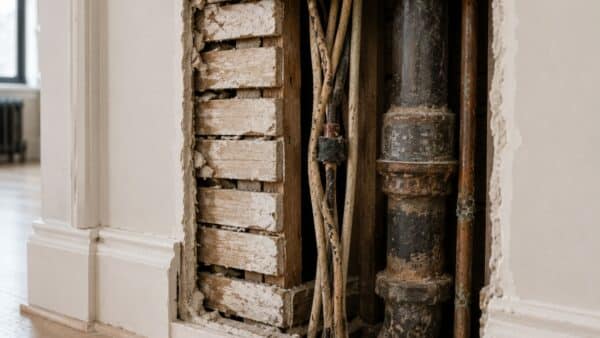
Short answer: The average NYC apartment is roughly 90 years old according to the NYC Housing and Vacancy Survey¹. Every wall is a potential mystery. Add strict board rules, landmark restrictions, and wet-over-dry requirements, and you’ve got a market where honest contractors simply cannot give you a fixed price without first seeing what’s behind your plaster.
The Pre-War Factor
Most Manhattan and Brooklyn co-ops and condos went up before 1940. Behind those charming crown moldings you’ll often find cloth-wrapped electrical wiring, cast-iron drains calcified over decades, and asbestos insulation that must be abated before demolition can start. The EPA requires proper asbestos handling² during any renovation that disturbs asbestos-containing materials.
None of this shows up during a walkthrough. It reveals itself on demo day. That’s why contractors who quote you a hard number before inspection are setting you up for change orders later.
Co-op vs. Condo: Does Ownership Type Affect Cost?
Physically, the renovation work is comparable. Financially, co-ops tend to cost more in time. Co-op boards require alteration agreements dictating everything from approved work hours to acceptable flooring materials. Approval timelines can stretch weeks longer than condos. Every extra week means additional rent, storage fees, and carrying costs. When you’re budgeting, factor in not just the construction cost but how long your life will be disrupted.
Typical NYC Condo Renovation Cost by Project Type
Short answer: Expect to pay roughly $120,000–$150,000 in labor for a full two-bedroom renovation, $30,000–$35,000 for a kitchen remodel, and $32,000–$35,000 for a bathroom remodel. Appliances, fixtures, and finishes are additional and vary based on your selections.
Full Apartment Renovation
A full renovation typically means gutting and rebuilding the kitchen and bathrooms, replacing flooring throughout, upgrading electrical to modern capacity, and installing new millwork and finish carpentry. For a standard two-bedroom co-op or condo in Manhattan or Brooklyn, labor costs generally fall between $120,000 and $150,000.
What pushes you toward the higher end? Plumbing relocations, structural changes, custom cabinetry, and site conditions in older buildings that need extra prep.
Kitchen Remodel
Kitchen labor typically runs $30,000–$35,000. That covers demolition, new electrical and plumbing rough-in, cabinetry installation, countertop templating and install, backsplash, and finish work. Appliances and cabinetry are client-supplied or sourced separately. Moving the sink or range to a new wall? Add plumbing and electrical relocation costs.
Bathroom Remodel
Bathroom labor ranges from $32,000–$35,000, depending on size and complexity. Converting a tub to a walk-in shower, moving fixtures, or tapping into a building riser all add cost. Buildings with strict riser-access rules may require coordination fees and extended timelines.
What About Per-Square-Foot Pricing?
You’ve probably seen per-square-foot pricing floating around. Here’s the problem: that metric is calibrated to new-build construction—not gut-and-rebuild renovation. When you’re working within an existing structure, cost isn’t evenly distributed. A bathroom requires far more labor per square foot than a living room. A blended per-square-foot number almost guarantees your budget won’t match reality.
The Real Cause of Surprise Costs—And How to Prevent Them
Short answer: Most cost overruns aren’t caused by hidden asbestos or bad plumbing. They’re caused by contractors who defer pricing until mid-project, turning “unknowns” into authorized change orders you have no choice but to pay.
How Change Orders Blow Up Budgets
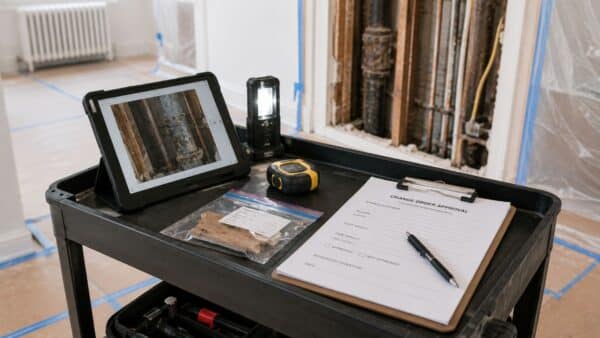
A change order is exactly what it sounds like: a change to the original scope, documented after the contract is signed. Some are legitimate—you decide you want a different countertop, or an inspector flags something no one could have predicted. But many change orders are actually predictable extras the contractor didn’t price upfront.
When a contractor says “we’ll figure out the permit fees later” or “we’ll price the subflooring once we open the floors,” they’re building change orders into your future.
The Change-Order Protocol Every Homeowner Should Demand
At MyHome, we follow a documented protocol that protects your budget:
- Likely extras are priced in the proposal upfront. Permit allowances, riser access fees, subflooring contingency, asbestos abatement—if it’s foreseeable, it’s in the number you see before you sign.
- Mid-project discoveries trigger a stop. If our crew opens a wall and finds something unexpected, work pauses.
- We bring you to see it. You stand in your apartment and see exactly what we found.
- We explain the scope and exact price. No vague “this might run you a few thousand more.”
- You sign off before we proceed. Nothing gets billed, no work resumes, until you’ve approved the change in writing.
This isn’t a marketing promise. It’s a process. And it’s the standard you should demand from any contractor you interview.
What a Transparent Proposal Should Include
Before you sign, scan the proposal for these line items:
- Permit filing fees
- Building riser/pipe access fees
- Subflooring removal and replacement contingency
- Asbestos testing and abatement (if the building requires it)
- DOB filing and inspection fees
- Any “allowances” with clearly defined caps
If you don’t see them, ask. If the contractor can’t answer, that’s your answer.
Board Approval: The Hidden Budget Variable
Short answer: A rejected or delayed alteration agreement doesn’t just cost you time—it costs money. Every extra week waiting for approval means rent on a temporary apartment, storage fees, and carrying costs on a home you can’t live in.
What Boards Look For—And Why Contractors Get Rejected
Boards reject alteration applications for predictable reasons: incomplete architectural drawings, unlicensed subcontractors on the application, missing insurance certificates, or proposed work that violates building rules (wet over dry, noise hours, prohibited materials).
The contractor—not you—should own this process. If they’re asking you to “check with the board” on whether something is allowed, they don’t know the building well enough.
Why Contractor Board-Approval History Matters
In 25 years of renovating co-ops and condos across Manhattan and Brooklyn, MyHome has never been turned down by a residential building. That’s not a guarantee your specific board will approve your specific project—every building is different. But a track record like that means we’ve internalized the approval playbook. We know what boards want to see, we prepare packages that pass the first time, and we take full responsibility for both building approvals and NYC Department of Buildings³ filings so you never have to touch either one.
How to Vet a Contractor’s Pricing Transparency
Short answer: The interview is your best protection. Ask the right questions, and contractors who rely on change orders will reveal themselves before you sign.
Questions to Ask Before You Sign
- “Are permits included in your price, or are they extra?”
- “What’s your change-order policy? Walk me through what happens if you find something unexpected.”
- “Have you ever been rejected by a co-op or condo board?”
- “What’s your warranty, and is it in writing?”
- “Can I supply my own materials if I find a better price?”
A contractor who answers confidently—with specifics, not generalities—has thought through the process.
Red Flags That Signal Future Overruns
Watch for these warning signs:
- Vague “allowance” language with no defined caps
- No line-item breakdown—just a single lump sum
- “We’ll price that once we open the walls”
- Pressure to sign before a site inspection
- Verbal promises about warranty with nothing in writing
Any of these should prompt you to get another bid.

Why a 10-Year Warranty Protects More Than Just Workmanship
Short answer: A written warranty shifts risk back to the contractor. When they’re on the hook for problems that surface years later, they’re incentivized to do it right the first time.
What to Look For in a Renovation Warranty
Insist on a warranty that is:
- Written, not verbal. If it’s not in the contract, it doesn’t exist.
- Clearly stated term. At MyHome, we provide a 10-year written warranty.
- Coverage for labor. Many warranties only cover materials—often already covered by the manufacturer. Labor is where the real protection matters.
You can learn more about what our warranty covers on our warranty page⁴.
Your Next Step: Get a Transparent, No-Surprise Estimate
Understanding NYC condo renovation cost ranges is a start. But ranges only become useful when they’re applied to your specific apartment—your layout, your building’s rules, your finishes, your timeline.
For 25 years, MyHome has renovated kitchens, bathrooms, and full apartments across Manhattan and Brooklyn. We don’t guess at pricing. We don’t rely on change orders. And we’ve never been rejected by a residential building.
Ready to see what your renovation will actually cost—with every foreseeable extra priced upfront and a documented process that protects your budget? Schedule a free consultation. We’ll walk your space, discuss your vision, and provide a written proposal outlining the recommended scope of work and pricing so you know exactly what you’re signing.
Request your free consultation today.
Sources
- U.S. Census Bureau. “New York City Housing and Vacancy Survey (NYCHVS).” https://www.census.gov/programs-surveys/nychvs.html
- U.S. Environmental Protection Agency. “Asbestos.” https://www.epa.gov/asbestos
- NYC Department of Buildings. https://www.nyc.gov/site/buildings/index.page
- MyHome Renovation Experts NYC. “Warranty.” /warranty/

Ofek Dahan
Ofek Dahan is the CEO of MyHome Renovation Experts, dedicated to delivering exceptional remodeling experiences through thoughtful design, quality craftsmanship, and transparent communication. He shares insights on renovation planning, industry trends, and creating homes that are both beautiful and functional for modern NYC living.
Related Posts

How to Shortlist Full-Service Firms for a Brooklyn Heights Co-op Renovation Before You Request Quotes
A pre-quote screening method for Brooklyn Heights co-op owners: evaluate renovation firms for relevant experience,...

Who Handles an NYC Apartment Renovation From Design Through Board Approval and Construction?
See what an end-to-end NYC apartment renovation partner should handle—from design and board packages to...

What Happens at a Designer-Guided NYC Renovation Showroom Appointment?
Overwhelmed by tile, stone, cabinets, and fixtures? Learn what to bring to a designer-guided NYC...