Home Inspiration
Open Concept Kitchen Renovation in a NYC Apartment: Can You Remove Walls, and What Does it Cost?
By Adam Blake
Many homeowners start considering an open concept kitchen renovation in their NYC apartments when their kitchen layout feels cramped or disconnected from the rest of the space. You look at the wall separating you from the light of the living room and think, “What if this wall wasn’t here?”
This is one of the most common renovation goals in NYC apartments. Whether you are in a pre-war co-op in Brooklyn or a modern condo in Manhattan, the desire for an open floor plan NYC apartment renovation is often the primary driver for a remodel. But in a city of rigid building codes and aging infrastructure, “just knocking down a wall” is never just that.
The Short Answer: Yes—But There is a “Catch”
Can you remove walls in a NYC co-op or condo? In many cases, wall removal is possible, but feasibility depends on several key factors:
- Load-Bearing vs. Non-Load-Bearing: Does the wall hold up the building, or just provide privacy?
- Riser Locations: Does the wall hide the building’s “veins”, the gas, water, or electrical lines that serve every floor?
- Wet-over-Dry Restrictions: Does removing the wall move your kitchen over a neighbor’s bedroom? (A major red flag for co-op boards).
- Building-Specific Rules: Your building’s Alteration Agreement may have specific bans on structural changes regardless of city law.

How to Determine if Your Wall is Load-Bearing (Without Guessing)
Before you grab a sledgehammer, understand this: Only an architect or structural engineer can legally confirm if a wall is load-bearing. At MyHome, we never rely on a contractor’s “gut feeling” alone, and neither should you.
While you wait for a professional assessment, here are a few clues we look for:
- Wall Thickness: In many older NYC buildings, exceptionally thick walls (12 inches or more) are often masonry and structural.
- Beam Patterns: If you see a beam running across your ceiling and disappearing into a wall, that wall is likely supporting the weight of the floor above.
- The “Hollow” Test: A simple knock can tell you if a wall is thin drywall (likely non-structural) or solid brick, though this is never a substitute for official blueprints.
The Full Cost Breakdown: What Wall Removal Actually Costs in NYC (2026)
Removing a wall involves demolition, debris removal (a major cost in NYC walk-ups), floor patching, and electrical rerouting. Here is what you should budget for in the 2026 market:
| Wall Type | Estimated Construction Cost | Additional Requirements |
|---|---|---|
| Non-Load-Bearing Wall | $3,000 – $8,000 | Minor electrical rerouting; debris hauling. |
| Load-Bearing Wall | $12,000 – $25,000+ | Structural steel beam installation; temporary shoring. |
| Engineering & Plans | $5,000 – $10,000 | Required for all structural or permit-heavy work. |
| NYC DOB Permits | $1,500 – $4,000 | Filing fees for ALT-2 or ALT-1 permits. |
Note: These costs cover the removal and structural support only. They do not include the cost of new cabinetry, flooring, or lighting that typically follows.
What Approvals You Need Before Touching a Wall
In NYC, you don’t just ask for forgiveness; you must ask for permission—from two separate “gatekeepers.”
1. The Co-op or Condo Board
Your building’s Alteration Agreement is your bible. To remove a wall, you will typically need to submit a formal package including architectural drawings and insurance certificates. If your project involves a wet-over-dry conflict (expanding a kitchen over a dry living area), the board may require extra waterproofing or deny the request entirely.
2. NYC Department of Buildings (DOB)
For non-load-bearing wall removal, you often still need a permit if you are moving electrical outlets or plumbing. For load-bearing walls, a full structural permit is mandatory. Furthermore, if your building was constructed before 1987, the DOB may require asbestos testing of the plaster or joint compound before demolition begins.

Design Opportunities: Beyond the Open Concept
Removing a wall isn’t just about “opening things up”; it’s about creating new functionality that wasn’t possible before.
- The Power Island: Replacing a wall with a massive kitchen island provides much-needed prep space and a casual dining spot.
- Light Flow: Many NYC apartments have “windowless” kitchens. Removing a wall allows natural light from the living room to finally reach your stove.
- The Peninsula Hybrid: If a full island feels too tight, a peninsula provides the “open” feel while maintaining a clear boundary and extra storage.
Real NYC Example from MyHome

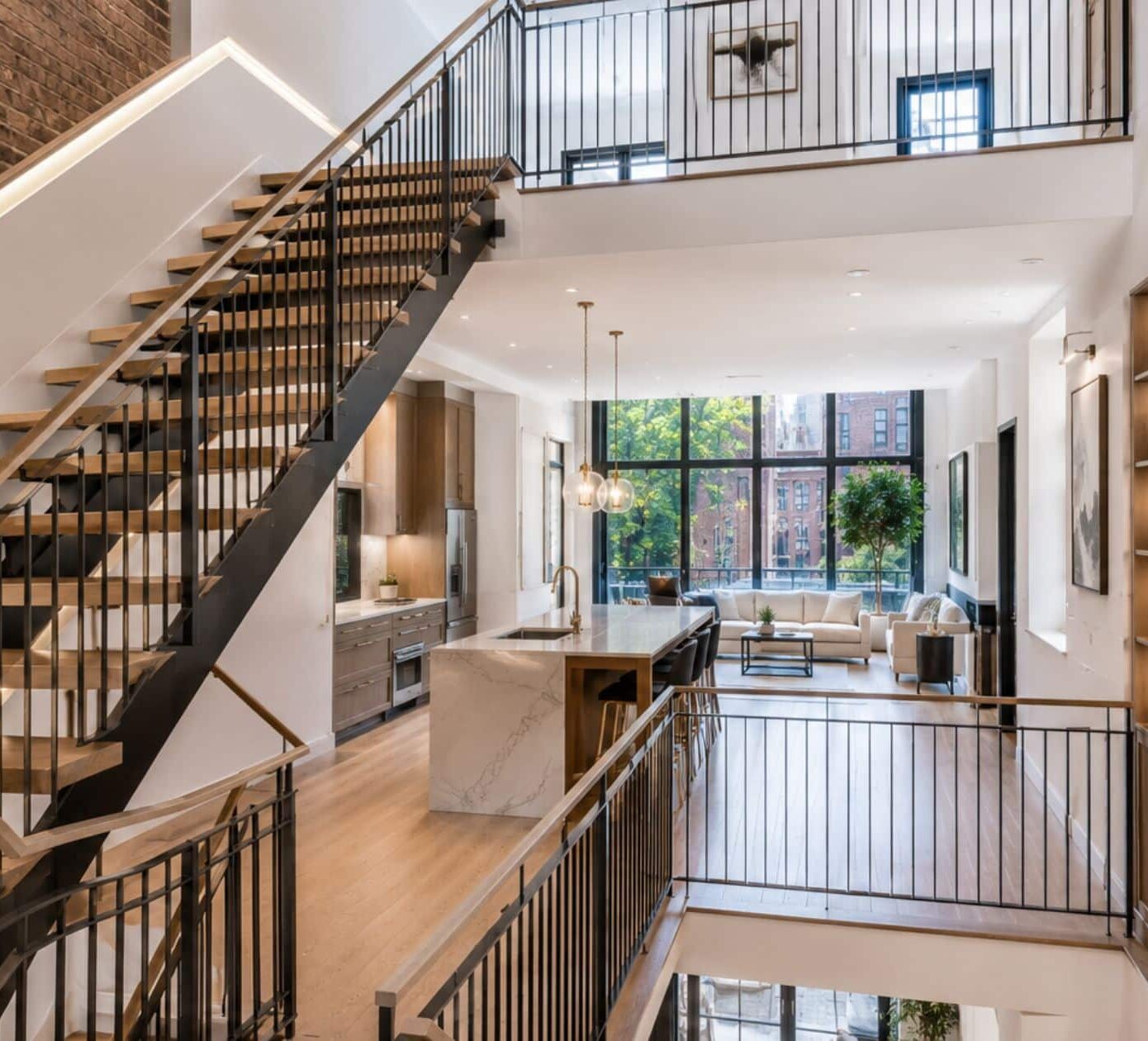
In an Upper West Side kitchen renovation at 303 West 66th Street, MyHome transformed a closed-off kitchen into a more open and connected living space.
The original layout separated the kitchen from the main living area, limiting both natural light and overall flow. By opening the space and reconfiguring the layout, the kitchen now connects more seamlessly with the living room, making the apartment feel larger and more functional.
The updated design incorporates clean, modern cabinetry and improved circulation, creating a layout that supports both everyday use and entertaining in a compact NYC footprint.
Projects like this are common in New York City, where opening up the kitchen can significantly improve how a space feels and functions, even without increasing square footage.
See the full project here: https://www.myhomeus.com/project-gallery/upper-west-side/303-west-66th-street/
Is Open Concept Right for Your Apartment?
As a trusted advisor, MyHome believes in honest guidance. Consider these factors before you commit to a open concept kitchen renovation in NYC:
- Smell and Sound: Without a wall, the sound of the dishwasher and the smell of seared salmon will travel through the entire apartment.
- Storage Loss: Walls hold cabinets. Ensure your new layout compensates for the loss of upper cabinet storage.
- Resale Impact: While open concepts are generally high-value, some buyers in pre-war buildings still prefer the charm of defined, formal rooms.
Ready to Open Up Your Kitchen?
At MyHome, we specialize in the “Heavy Lifting” of NYC renovations. We don’t just design the space; we coordinate structural work, board approvals, and DOB filings required for wall removal in NYC apartments. We bridge the gap between your “What if?” and a finished, permit-cleared home.
Book Your Free Design Consultation & Wall Feasibility Assessment Today

NYC Open Concept Kitchen Renovation FAQs
Q: Do I need a permit to remove a non-load-bearing wall in NYC?
Yes, in most cases. Even if the wall is non-structural, you will likely need a permit if you are moving electrical wiring, plumbing lines, or if the removal changes the “means of egress” (exit path) of the apartment.
Can a co-op board stop me from removing a wall?
Yes. Even if the city allows it, your co-op board has final authority through the Alteration Agreement. They may deny wall removal if they believe it compromises the building’s structural integrity or creates a “wet-over-dry” conflict.
How much does a structural engineer cost for wall removal in NYC?
For a standard apartment renovation, expect to pay between $5,000 and $10,000 for structural engineering plans and the necessary architectural drawings for DOB filing.

Adam Blake
Adam Blake is Design Manager at MyHome Renovation Experts, known for blending smart space planning with timeless design. With hands-on experience guiding homeowners through renovations, he understands how to transform kitchens and living spaces into highly functional, beautifully crafted environments.
Related Posts

NYC Townhouse Backyard Extensions: Deck Permits & Zoning Laws
NYC Townhouse Backyard Extensions are one of the most effective ways to expand outdoor living...
Converting NYC Multi-Family to Single-Family Townhouses: ALT-1 vs. ALT-2
NYC townhouse conversion projects often begin with the vision of transforming a divided brownstone or...

NYC Studio Apartment Renovation: How to Maximize Space with Smart Design
For the modern New Yorker, the studio apartment has officially graduated from a “starter” home...