Home Planning & Renovations
How to Tell If a NYC Renovation Company Actually Has Co-op and Condo Approval Experience
By Ofek Dahan
Every contractor in Manhattan and Brooklyn claims NYC renovation company co-op condo experience—but there’s a vast difference between a company that’s navigated hundreds of successful submissions and one that’s learning the process on your project.
Your co-op or condo renovation will require board approval before any work begins. The contractor you choose will need to compile alteration agreement packages, coordinate with building management, schedule around neighbor concerns, and manage DOB permits simultaneously. Get this wrong, and you face rejection letters, project delays, and wasted design fees.
This guide gives you the specific questions that reveal whether a contractor has genuine experience—or is just good at marketing. Use these criteria to evaluate any renovation company, including us.
At a glance
- Ask for specific track records — vague claims like “we handle approvals” reveal nothing about actual experience or rejection history.
- Confirm who prepares your alteration agreement — full-service contractors compile drawings, insurance, and engineering letters so you don’t manage paperwork.
- Verify their change-order protocol — experienced contractors stop, show you unexpected conditions, and get written approval before proceeding.
- Understand co-op vs. condo differences — co-op boards have more discretion to reject; condos typically follow clearer guidelines.
- Evaluate accountability structure — know exactly who you’ll work with from consultation through completion.


Why “We Handle Board Approvals” Isn’t Enough
Short answer: Many contractors claim co-op and condo experience but lack a systematic approval process. Ask for specifics—track record, building references, and who actually prepares your submission package.
“We handle board approvals” has become standard language on every NYC renovation company’s website. The phrase tells you nothing about actual experience.
Here’s what separates contractors who truly understand the process:
Systematic experience vs. occasional exposure. A contractor who’s completed three co-op projects isn’t necessarily prepared for yours. Look for companies with documented processes—specific steps for gathering building requirements, preparing submission packages, and coordinating with management companies.
Prevention vs. reaction. Experienced contractors prevent board rejections by understanding what boards look for. Inexperienced contractors submit packages and hope for the best, then scramble when problems arise.
Full responsibility vs. partial help. Some contractors compile your alteration agreement, submit it, and manage all communication with your building. Others hand you a scope of work and expect you to navigate the rest. The difference matters enormously for your stress level and timeline.
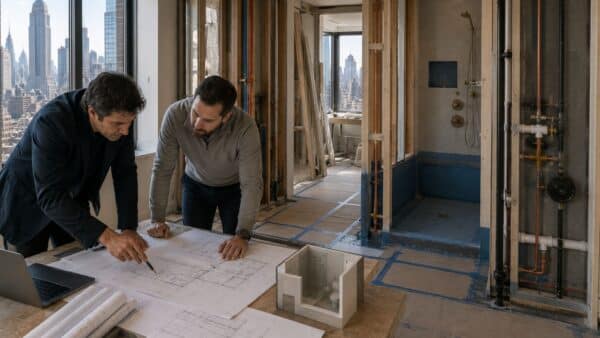

How to Verify NYC Renovation Company Co-op Condo Experience: 8 Questions
Short answer: These questions expose whether a contractor has genuine approval expertise or is overstating their capabilities. Vague answers to any of these are red flags.
1. What’s Your Board Approval Track Record?
Ask for specifics: How many co-op and condo projects have you completed? How many board rejections have you received?
An experienced contractor will answer confidently with real numbers. At MyHome, we’ve never been turned down by a residential building in 25 years of NYC renovations. That track record reflects our systematic approach to board submissions—not luck.
Red flag: “We’ve never had problems” without specifics, or any hesitation when asked directly.
2. Can You Show Me Projects in Buildings Like Mine?
Pre-war and post-war buildings present different challenges. Co-ops and condos have different approval processes. Manhattan and Brooklyn buildings have different management styles. Ask for references in buildings similar to yours.
Red flag: All portfolio examples are townhouses, new construction, or suburban homes. This suggests limited apartment building experience.
3. Who Prepares and Submits the Alteration Agreement?
This question reveals how much work falls on you. A full-service contractor compiles everything: architectural drawings, insurance certificates, contractor licenses, engineering letters when needed, and the complete scope of work.
At MyHome, we take full responsibility for both building approvals and DOB filings. You don’t manage paperwork or chase down documents—that’s our job.
Red flag: “We’ll give you what you need, and you submit it to your board.” This means you’re project-managing your own approval process.
4. How Do You Handle Building Management Relationships?
Your super and management company can make or break your renovation experience. Experienced contractors know that building relationships affect scheduling, deliveries, noise complaints, and final sign-offs.
Ask about communication protocols: Who contacts the super? How are deliveries coordinated? What’s the plan for neighbor notifications?
Red flag: Dismissive attitude toward building staff, or no clear process for ongoing communication.
5. What Happens If the Board Rejects My Plans?
This question tests whether they’ve thought about failure—and whether they’ve experienced it.
An experienced contractor should explain how they prevent rejections, not just how they’d respond to one. They should describe specific documentation practices, common board concerns they anticipate, and how they address potential issues before submission. For more on this topic, see our guide on why NYC co-op and condo boards reject renovations.
Red flag: No clear prevention strategy, or “that’s never happened” without explaining why.
6. Who Will I Actually Work With During My Project?
Accountability requires knowing your team. Ask exactly who you’ll communicate with from consultation through completion.
At MyHome, you work with three people in sequence: your Renovation Expert during planning, your Designer during design development, and your Project Manager from kickoff through completion. The PM leads your project day-to-day and provides regular written updates.
Red flag: “Whoever’s available” or unclear handoffs between team members.
7. How Do You Handle Unexpected Conditions Behind the Walls?
Every NYC apartment renovation uncovers surprises—deteriorated plumbing, outdated wiring, or structural conditions that require additional work. How a contractor handles these moments reveals their integrity.
Ask about their change-order process. At MyHome, we stop work, bring you to see the condition, explain what we found and why it needs addressing, provide an exact price, and get your written approval before proceeding. We never replace first and bill later.
Red flag: “We’ll figure it out as we go” or no clear protocol for pricing mid-project changes.
8. Do You Coordinate DOB Permits Separately from Board Approval?
Board approval and DOB permits are parallel processes that must be coordinated. Experienced contractors manage both simultaneously because delays in either affect your timeline.
Ask who files permits, who schedules inspections, and how these processes align with your building’s requirements.
Red flag: Confusion about the relationship between board approval and city permits, or expectation that you’ll manage DOB filings yourself.
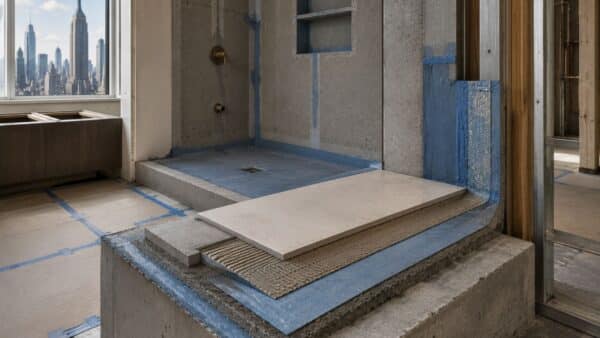

Red Flags That Signal Inexperience with Co-op and Condo Work
Short answer: Watch for contractors without co-op references, confusion about alteration agreements, unclear accountability, or expectations that you’ll manage building relationships yourself.
Beyond the specific questions above, these warning signs suggest a contractor lacks the experience your project requires:
- No co-op or condo references available. If every past project is a townhouse or single-family home, your building will be their learning experience.
- Confusion about wet-over-dry rules. Most co-ops prohibit placing new bathrooms or kitchens over downstairs bedrooms. An experienced contractor asks about stack locations and wet zones immediately.
- Expecting you to manage building logistics. If the contractor assumes you’ll handle super communication, elevator scheduling, or neighbor coordination, they don’t understand NYC apartment renovation realities.
- Unclear about insurance and licensing requirements. Co-op boards require specific insurance certificates and license documentation. A contractor who seems uncertain about these requirements hasn’t submitted many packages.
- No process for board submissions. If they can’t describe their standard approach to compiling alteration agreements, they’re improvising with each project.
Co-op vs. Condo: Different Approval Processes Require Different Experience
Short answer: Co-op boards have more discretion to reject renovations for subjective reasons. Condos typically follow clearer alteration agreement guidelines. Both require contractor expertise, but the politics differ.
Not all NYC buildings work the same way, and your contractor should understand the distinctions.
Co-op approvals involve a board with significant discretion. Under New York Business Corporation Law, co-op boards operate with broad authority over building operations, including renovation approvals. They can reject renovations that technically comply with building rules if they have concerns about disruption, contractor reputation, or scope of work. Politics and relationships matter. Experienced contractors know how to present projects in ways that address typical board concerns.
Condo alterations usually follow more standardized processes governed by the condo’s bylaws and New York Real Property Law. The approval path is often more predictable, but proper documentation remains essential. Engineering requirements and neighbor notification processes vary by building.
For a detailed comparison of these processes, see our guide on co-op vs. condo renovation rules, timelines, and cost differences.
What a Complete Board-Ready Proposal Should Include
Short answer: Experienced contractors provide thorough documentation automatically: detailed scope, insurance certificates, license verification, drawing sets, and protection protocols. You shouldn’t have to ask for these elements.
When you receive a proposal from an experienced contractor, these elements should be included or clearly addressed:
- Itemized scope of work with specific descriptions of what’s included
- Insurance certificates meeting your building’s requirements
- Contractor license verification current with NYC
- Architectural drawings or design plans for board review
- Engineering letters if your project involves structural, plumbing, or electrical changes
- Protection protocols for common areas, hallways, and elevators
- Neighbor notification plan if required by your building
- Timeline showing approval phase, permit phase, and construction phase
If a contractor’s proposal lacks these elements—or requires you to gather them separately—question whether they understand the full scope of what NYC apartment renovation requires. For more on evaluating proposals, see our guide on questions to ask before hiring a NYC renovation contractor.
What complete packages looked like on a recent MyHome job
Tub-to-shower bathroom at 201 West 74th Street, Upper West Side: a one-page neighbor notice went out on the start date with the expected duration of eight to ten weeks, weekday hours of 9:00 am to 3:30 pm, no weekend or holiday work, and a phone number for questions.


Why We’ve Never Been Turned Down by a NYC Building
Short answer: MyHome takes full responsibility for both building approvals and DOB permits. Our systematic approach to documentation and building relationships has resulted in zero board rejections across 25 years of NYC renovations.
We’ve shared the criteria for evaluating any contractor’s co-op and condo experience. Here’s how MyHome meets those standards:
Track record: We’ve never been turned down by a residential building. That’s not a guarantee your specific board will approve—no contractor can promise that—but it reflects our systematic approach to understanding building requirements and preparing complete submission packages.
Full responsibility: We handle the entire approval process. You don’t coordinate with your building’s management company, compile insurance documents, or chase down engineering letters. We take responsibility for both building approvals and city permits so you don’t touch either process.
Clear accountability: You work with exactly three MyHome team members in sequence—your Renovation Expert, your Designer, and your Project Manager. Your PM leads from kickoff through completion with regular written updates.
Transparent change orders: When we find unexpected conditions, we stop, show you what we found, explain the scope and exact cost, and get your approval in writing before proceeding. No surprise charges on your final invoice.
25 years in Manhattan and Brooklyn: Our experience spans pre-war and post-war buildings, co-ops and condos, from the Upper East Side through Brooklyn Heights. We’ve built relationships with building staff and management companies across the city.
10-year warranty: We stand behind our work with a written warranty that gives you long-term peace of mind.
Two recent MyHome building reviews
Kitchen at 350 West 50th Street, Hell’s Kitchen: the building sent the scope to an outside architect, whose numbered review of August 2021 was answered in September point by point in the same format, with a revised scope that stood on its own.
Kitchen and two bathrooms at 230 East 79th Street, Upper East Side: the plans went through two building review sets before an amended plan was approved on 22 July 2024, with the materials for all three rooms specified by 30 January 2024.
Verify Before You Sign: Your Next Step
Use these questions with any contractor you’re considering—including us. The answers will reveal who truly understands NYC apartment renovation and who’s overstating their capabilities.
If you’d like to verify that MyHome meets these criteria for your specific building, schedule a free consultation. We’ll review your building’s requirements, discuss your project scope, and explain exactly how we’d handle your approval process.
No pressure, no obligation—just the information you need to make a confident decision.
Schedule Your Free Consultation
Frequently Asked Questions
How many co-op or condo projects should a contractor have completed before I trust them with mine?
Look for systematic experience, not just a number. A contractor with clear processes for board submissions and a strong approval track record is more valuable than one with volume but rejections. Ask about their track record specifically.
How long should board approval take with an experienced contractor?
Most boards review complete alteration agreement packages within 30-60 days, though timelines vary by building. According to the NYC Department of Buildings, permit review times add to this timeline. Experienced contractors minimize delays by submitting polished, complete packages that don’t require multiple revision rounds.
Can I verify a contractor’s board approval track record?
Yes—ask for specific numbers and building references. A confident contractor shares this information readily. Vague answers or hesitation are warning signs.
What’s the difference between co-op and condo approval processes?
Co-op boards operate under New York Business Corporation Law with broad discretionary authority, meaning they can reject renovations for subjective reasons. Condo alterations are governed by Real Property Law and typically follow clearer guidelines with more predictable approval paths. Both require contractor expertise in documentation and coordination.
Sources
- New York State Senate — Business Corporation Law: https://www.nysenate.gov/legislation/laws/BSC
- New York State Senate — Real Property Law: https://www.nysenate.gov/legislation/laws/RPP
- NYC Department of Buildings — Alteration Type 2: https://www.nyc.gov/site/buildings/homeowner/alteration-type-2.page
- MyHome — What Is an Alteration Agreement: https://www.myhomeus.com/blog/alteration-agreement-nyc-co-op-condo/
- MyHome — Co-op vs. Condo Renovation NYC: https://www.myhomeus.com/blog/co-op-vs-condo-renovation-nyc-rules-timelines-and-cost-differences/
- MyHome — Why NYC Co-op and Condo Boards Reject Renovations: https://www.myhomeus.com/blog/why-nyc-coop-condo-boards-reject-renovations/
- MyHome — Wet-Over-Dry Rule NYC: https://www.myhomeus.com/blog/wet-over-dry-rule-nyc/
- MyHome — Questions to Ask NYC Renovation Contractor: https://www.myhomeus.com/blog/questions-to-ask-nyc-renovation-contractor/
- MyHome — Warranty: https://www.myhomeus.com/warranty/

Ofek Dahan
Ofek Dahan is the CEO of MyHome Renovation Experts, dedicated to delivering exceptional remodeling experiences through thoughtful design, quality craftsmanship, and transparent communication. He shares insights on renovation planning, industry trends, and creating homes that are both beautiful and functional for modern NYC living.
Related Posts

How to Shortlist Full-Service Firms for a Brooklyn Heights Co-op Renovation Before You Request Quotes
A pre-quote screening method for Brooklyn Heights co-op owners: evaluate renovation firms for relevant experience,...

Who Handles an NYC Apartment Renovation From Design Through Board Approval and Construction?
See what an end-to-end NYC apartment renovation partner should handle—from design and board packages to...

What Happens at a Designer-Guided NYC Renovation Showroom Appointment?
Overwhelmed by tile, stone, cabinets, and fixtures? Learn what to bring to a designer-guided NYC...